

Top 10 Tallest Statues in the World: Giants That Touch the Sky
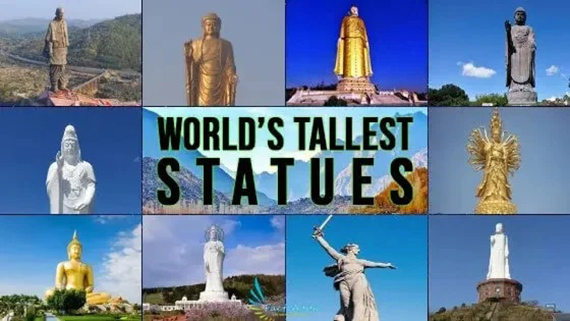
From ancient civilizations to modern nations, humanity has always expressed faith, power, culture, and identity through monumental statues. These towering structures are not just feats of engineering; they are symbols of devotion, national pride, artistic mastery, and historical legacy. Over the past century, advancements in construction technology have allowed statues to reach astonishing heights, dwarfing even famous skyscrapers.
This article explores the Top 10 Tallest Statues in the World, ranked by their total height including pedestal, and examines their history, purpose, cultural significance, and architectural achievement.
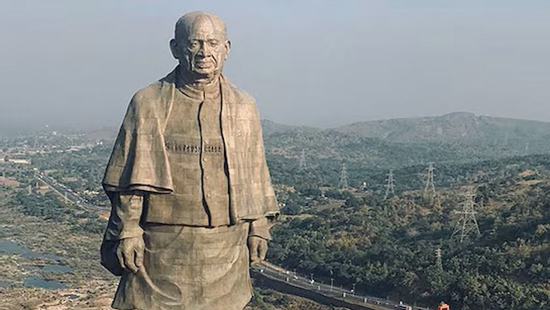
Statue of Unity – India
Height: 182 meters (597 ft), Location: Gujarat, India, Completed: 2018.
The Statue of Unity is currently the tallest statue in the world, standing almost twice as tall as the Statue of Liberty. It depicts Sardar Vallabhbhai Patel, one of India’s most respected leaders and the country’s first Deputy Prime Minister.
Historical Significance
Patel played a crucial role in unifying more than 560 princely states into the Republic of India after independence in 1947. The statue was built to honor his contribution to national unity.
Engineering Marvel
Designed to withstand earthquakes and wind speeds up to 180 km/h.
Constructed using reinforced concrete, steel framework, and bronze cladding.
Faces the Sardar Sarovar Dam, symbolizing strength and stability.
Cultural Impact
The monument has become a major tourist attraction and a powerful symbol of Indian nationalism and unity.
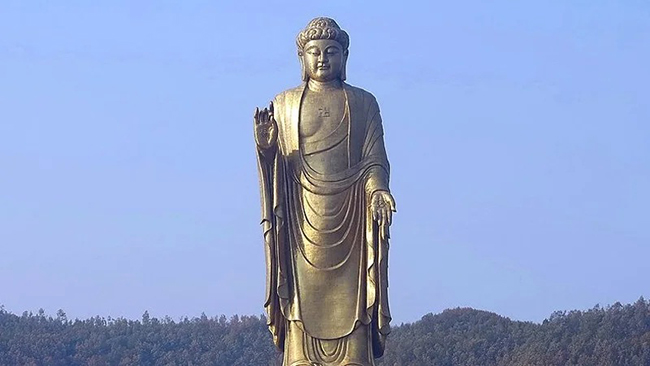
Spring Temple Buddha – China
Height: 128 meters (420 ft), Location: Henan Province, China, Completed: 2008.
The Spring Temple Buddha represents Vairocana Buddha, a cosmic figure in Mahayana Buddhism.
Spiritual Importance
Vairocana Buddha symbolizes universal wisdom and enlightenment. The statue stands near a sacred hot spring, believed to have healing properties.
Construction Details
Made of copper alloy, Built over several stages,Pedestal includes a lotus throne and a multi-level base.
Religious Role
It serves as a major pilgrimage site and reflects China’s long-standing Buddhist heritage.
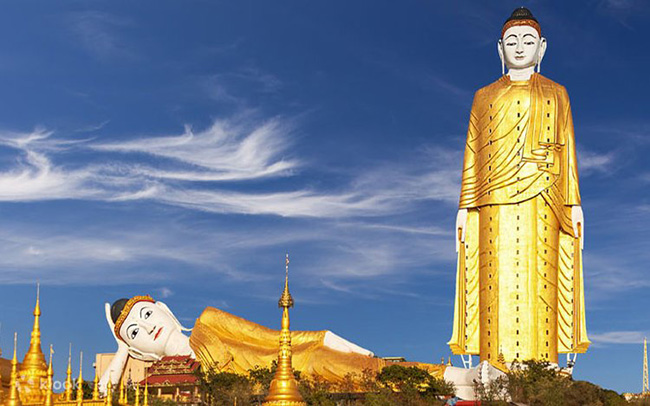
Laykyun Sekkya Buddha – Myanmar
Height: 115.8 meters (380 ft), Location: Khatakan Taung, Myanmar, Completed: 2008.
This towering standing Buddha is one of Southeast Asia’s most impressive religious monuments.
Symbolism
The statue represents Gautama Buddha in a posture of reassurance and compassion.
Surroundings
Accompanied by a massive reclining Buddha nearby.
Located on a hilltop, enhancing its visual dominance.
Cultural Context
Myanmar has a deep-rooted Buddhist tradition, and this statue reflects the nation’s devotion and religious identity.
Ushiku Daibutsu – Japan
Height: 100 meters (330 ft), Location: Ushiku, Ibaraki Prefecture, Completed: 1993.
The Ushiku Daibutsu depicts Amitabha Buddha, associated with infinite light and life.
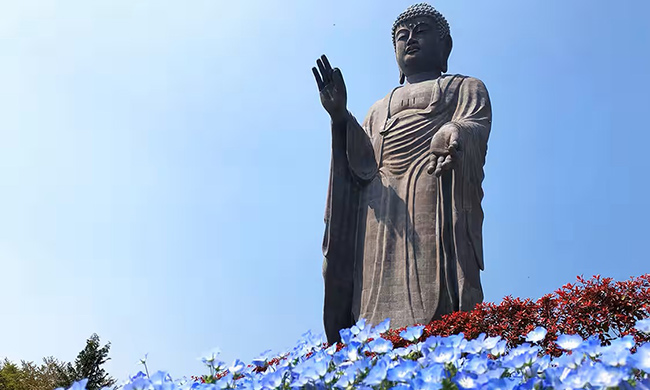
Unique Features
Interior includes four floors with exhibits, meditation spaces, and relics.
An observation deck inside the chest offers panoramic views.
Artistic Design
The statue’s calm expression and flowing robes reflect Japanese minimalist aesthetics combined with Buddhist symbolism.
Sendai Daikannon – Japan
Height: 92 meters (302 ft), Location: Sendai, Japan, Completed: 1991.
This statue represents Kannon, the Bodhisattva of Mercy.
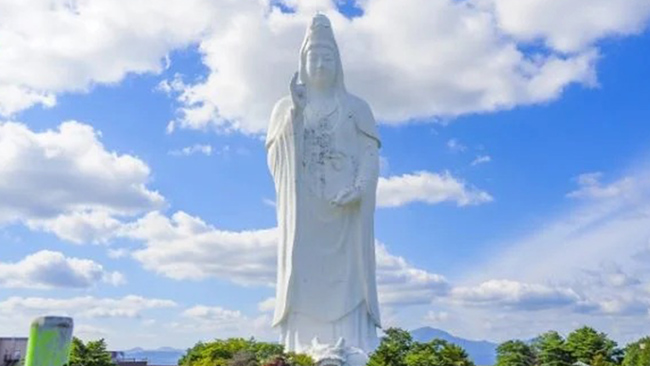
Religious Meaning
Kannon is revered for compassion and protection. The statue holds a water flask symbolizing the relief of suffering.
Visitor Experience
Inside, visitors can explore 12 levels representing the zodiac signs and Buddhist teachings.
Guanyin of Nanshan – China
Height: 99 meters (325 ft), Location: Hainan Province, China, Completed: 2005.
This statue depicts Guanyin, the Bodhisattva of Compassion.
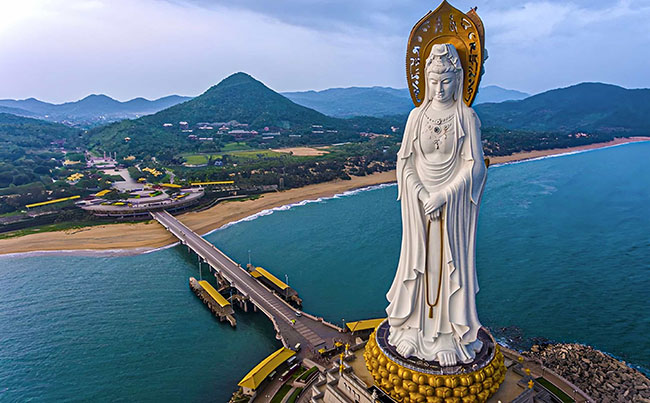
Distinctive Design
Three faces representing peace, wisdom, and compassion.
One face looks inland, two face the sea.
Cultural Role
The statue blends Chinese Buddhist tradition with coastal spiritual symbolism, making it a prominent pilgrimage destination.
Dai Kannon of Kita no Miyako Park – Japan
Height: 88 meters (289 ft), Location: Hokkaido, Japan, Completed: 1989.
Though less famous internationally, this statue remains a significant regional landmark.
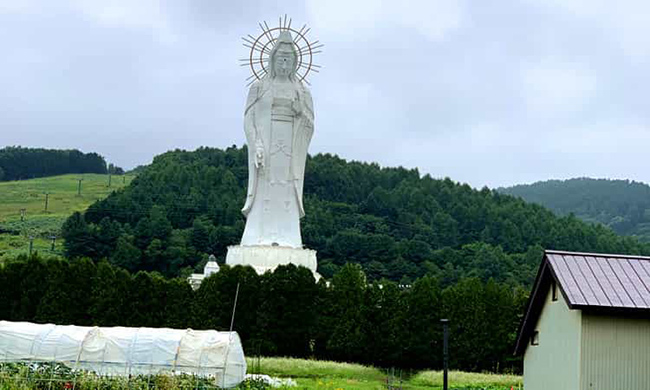
Symbolism
Represents Kannon as a guardian figure watching over the region.
Status
Currently closed to the public, but still admired for its scale and spiritual symbolism.
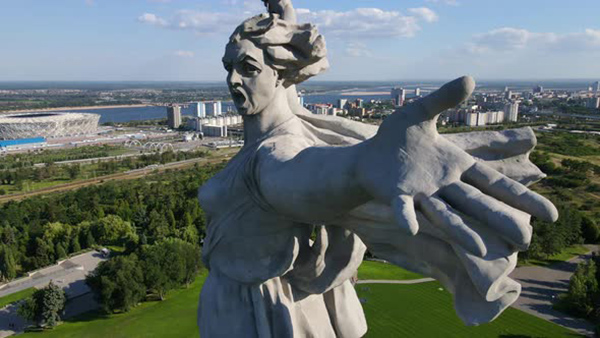
Motherland Calls – Russia
Height: 85 meters (279 ft), Location: Volgograd, Russia, Completed: 1967.
Unlike most statues on this list, The Motherland Calls is not religious but commemorative.
Historical Background
Built to honor the Soviet soldiers who died in the Battle of Stalingrad during World War II.
Artistic Power
Depicts a woman wielding a sword, calling her people to defend the nation.
A masterpiece of Soviet monumental art.
Legacy
At the time of completion, it was the tallest statue in the world.
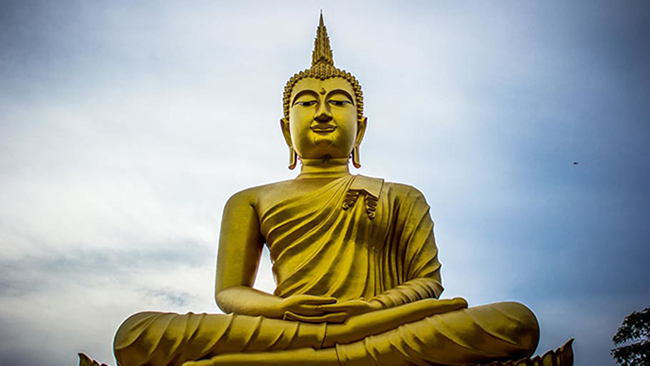
Great Buddha of Thailand
Height: 92 meters (302 ft), Location: Ang Thong Province, Thailand, Completed: 2008.
Also known as Phra Buddha Maha Nawamin, this statue is the tallest in Thailand.
Religious Importance
Represents Buddha in the posture of enlightenment and serenity.
Community Effort
Funded largely through public donations, reflecting collective devotion.
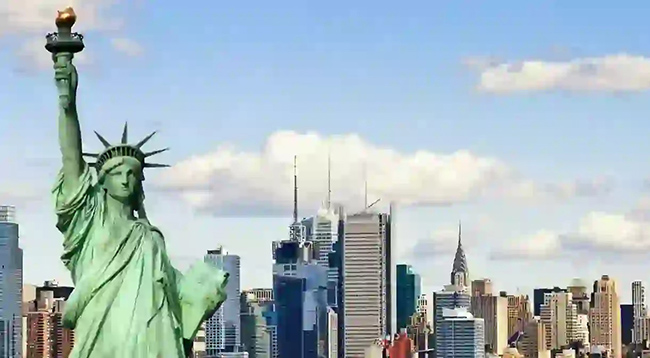
Statue of Liberty – United States
Height: 93 meters (305 ft), Location: New York City, USA, Completed: 1886.
Though no longer among the tallest, the Statue of Liberty remains one of the most iconic statues in the world.
Symbolism
Represents freedom, democracy, and hope for immigrants arriving in America.
Historical Importance
A gift from France to the United States, commemorating shared ideals of liberty.
Global Influence
Its design and symbolism have inspired countless monuments worldwide.
The tallest statues in the world are far more than oversized sculptures. They are reflections of faith, power, gratitude, remembrance, and national identity. From Buddhist icons promoting peace and compassion to monuments honoring freedom and sacrifice, these statues stand as silent storytellers of human civilization.
As technology advances, even taller statues may rise in the future. Yet the true value of these monuments lies not in their height alone, but in the ideas and histories they embody—reminding us that humanity has always looked upward, seeking meaning beyond the ordinary.
Sources
WorldAtlas– Rankings and heights of tallest statues
BBC History & Culture– Monumental architecture and global heritage
Encyclopaedia Britannica– Statues, monuments, and historical background
National Geographic– Cultural and historical significance of world monuments
UNESCO World Heritage Centre– Cultural heritage and monument documentation

