

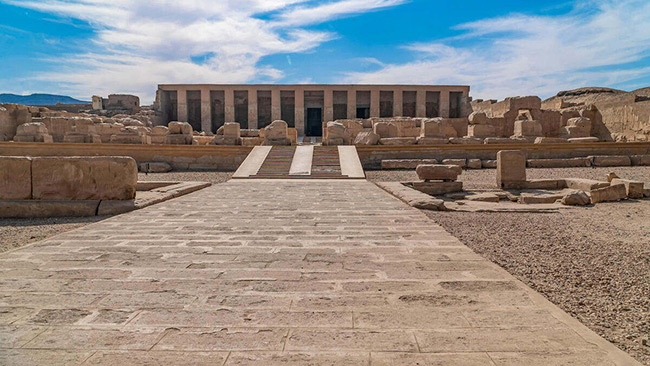
The Holy City of Abydos
Abydos (Ancient Egyptian: Abju) stands as one of the most intellectually and spiritually significant archaeological sites in the world. Located in Middle Egypt, it was the beating heart of the cult of Osiris, the god of the afterlife.
While the Great Pyramids represent the might of the Old Kingdom’s engineering, the Temple of Seti I at Abydos represents the zenith of New Kingdom artistic refinement and theological complexity.
For the historian, Abydos is not merely a collection of ruins; it is a “living” document that traces the evolution of Egyptian kingship, the transition of religious myths, and the literal lineage of the Pharaohs.
The Historical Context of Abydos
Abydos is one of the oldest inhabited cities in Upper Egypt. Its history stretches back to the Naqada period (c. 4000 BCE). By the First Dynasty, it became the royal necropolis. Early kings, such as Djer and Den, were buried here in Umm el-Qa’ab, establishing the site as the “Gateway to the Duat” (the Underworld).
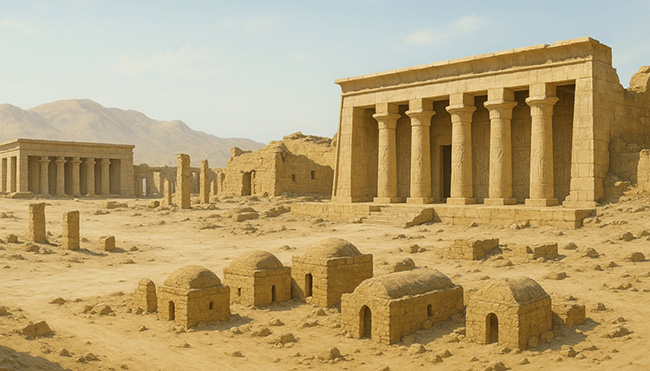
By the 19th Dynasty (c. 1290 BCE), Pharaoh Seti I recognized the need to solidify his family’s legitimacy. His dynasty was relatively new, rising from military roots after the political instability of the Amarna Period (the “heretic” reign of Akhenaten). Building a magnificent temple at Abydos—the most sacred site in Egypt—was a masterstroke of political and religious propaganda.
The Architecture of the Great Temple
The Temple of Seti I is structurally unique. Unlike the traditional linear temples of Karnak or Luxor, it features an L-shaped floor plan. Historical consensus suggests this was out of reverence for the Osireion, an older structure located directly behind the temple axis.
The Outer Courtyards and Pylons
Originally, the temple was accessed through two massive pylons and two open courtyards. Much of this outer structure was completed by Seti’s son, Ramesses II. The reliefs here transition from the delicate, high-relief style of Seti I to the deeper, more hurried sunken-relief style characteristic of Ramesses’ later reign.
The Hypostyle Halls
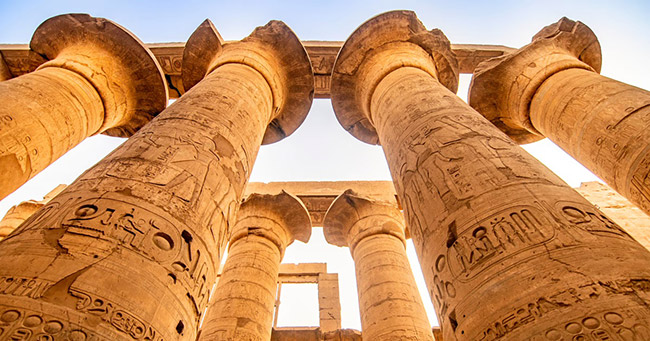
The temple features two massive hypostyle halls. The first contains 24 papyrus-cluster columns, while the second contains 36. These halls serve as the transition from the mundane world to the divine. The quality of the limestone used here allowed for a level of carving detail that is unmatched in all of Egypt.
The Seven Sanctuaries: A Theological Map
The heart of the temple is divided into seven vaulted chapels. This was a radical departure from the usual one- or three-shrine layout. Each chapel was dedicated to a specific deity, creating a “divine parliament” that unified the various cults of Egypt:
- Seti I (The Deified King): Cementing his place among the gods.
- Ptah: The creator god of Memphis.
- Re-Horakhty: The solar deity of Heliopolis.
- Amun-Re: The state god of Thebes.
- Osiris: The Lord of Abydos.
- Isis: The Divine Mother.
- Horus: The Protector of Royalty.
Horus: The Prince of Abydos
While the Temple of Horus at Edfu is his most famous standalone monument, the Horus Chapel at Abydos is historically vital because it depicts the deity in his most “functional” role: the legitimizer of the King.
The Role of Horus in the Osirian Triad
In Abydos, Horus is celebrated as Harsiese (Horus, son of Isis) and Har-nedj-itef (Horus, the avenger of his father). The mythology is central to the temple’s purpose:
- The Murder of Osiris: After Osiris was murdered by his brother Set, Horus was raised in secret by Isis.
- The Restoration of Ma’at: By defeating Set and reclaiming the throne, Horus restored Ma’at (divine order).
- The Pharaoh as Horus: Every living Pharaoh was believed to be the earthly manifestation of Horus. By dedicating a sanctuary to Horus at Abydos, Seti I was telling his subjects that he was the rightful “Avenging Son” who had restored order to Egypt after the chaos of the previous century.
Iconography in the Horus Chapel
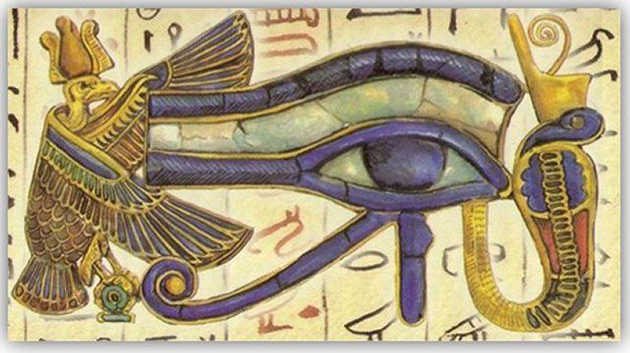
The reliefs within the Horus sanctuary are breathtaking. They depict the “Opening of the Mouth” ceremony and various offering scenes. One particularly famous relief shows Horus and the ibis-headed Thoth pouring a stream of Ankh (life) and Was (power) symbols over Seti I during his coronation—a literal baptism of divine kingship.
The Abydos King List: A Historian’s Goldmine
Located in the “Gallery of Lists,” the Abydos King List is one of the most important chronological documents in Egyptology. It features Seti I and the young prince Ramesses II offering incense to the cartouches of 76 of their predecessors.
Historical Omissions: The list is as famous for who is not on it as who is. To maintain the “purity” of the royal line, the following were erased from history:
- Hatshepsut: The female Pharaoh.
- Akhenaten: The “Heretic” king who tried to enforce monotheism.
- Tutankhamun: Associated with the Amarna period.
- Ay and Horemheb: Often minimized in the 19th Dynasty’s official narrative.
For modern historians, this list (along with the Turin Papyrus) provides the skeletal structure of Egyptian chronology.
The Mystery of the Osireion
Directly behind Seti’s temple lies the Osireion, a megalithic structure that sits below the water table. Its architecture is starkly different from the main temple. It uses massive red granite blocks, reminiscent of the 4th Dynasty Valley Temple at Giza.
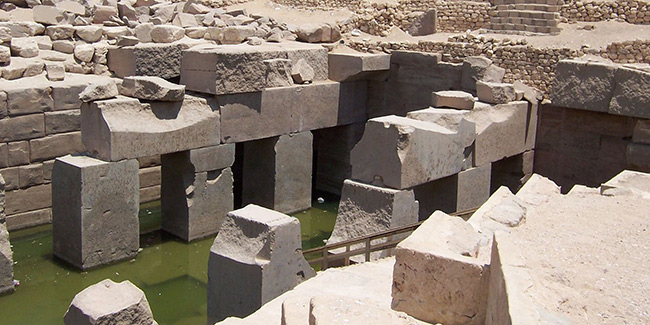
- The Purpose: It was likely a “cenotaph”—a symbolic tomb for Osiris.
- The Water Moat: The central platform was surrounded by water, simulating the Primeval Mound that emerged from the chaotic waters of Nun at the start of creation.
- Historical Debate: While officially attributed to Seti I, some archaeologists argue the Osireion is far older, potentially dating to the Old Kingdom, and was later incorporated into Seti’s temple complex.
The “Helicopter” Hieroglyphs: Debunking the Myth
No history of Abydos is complete without addressing the famous “Abydos Mystery” found on a ceiling beam in the first hypostyle hall. To the untrained eye, the carvings look like a helicopter, a tank, and a submarine.
The Historical Reality: This is a classic case of a palimpsest. Originally, the hieroglyphs contained the titles of Seti I (“He who repels the nine bows”). When Ramesses II took over the temple, he had the inscription re-carved with his own titles (“He who protects Egypt and overthrows the foreign lands”).
Over time, the plaster filling the old carvings fell out, and the overlapping of the two sets of signs created shapes that look like modern machinery. It is a fascinating example of how layers of history can create accidental mysteries.
The Artistic Style: The “Abydos School”
The reliefs at Abydos are widely considered the finest in Egypt. Unlike the deep-cut, “heavy” reliefs of the later Ramesside era, the Seti I reliefs are Low Reliefs.
- Detail: You can see individual fingernails, the texture of transparent linen robes, and the intricate jewelry of the gods.
- Emotion: There is a softness in the faces of the deities that is rarely seen in the more rigid, militaristic art of later centuries.
Preservation and Modern Significance
In recent years, the American Research Center in Egypt (ARCE) and various international missions have worked to preserve Abydos. The site faces threats from rising groundwater and salt crystallization.
For the modern visitor and historian, Abydos remains a site of quiet contemplation. Unlike the bustling crowds of Giza or the Valley of the Kings, Abydos retains an air of ancient sanctity. It is a place where one can truly understand the ancient Egyptian obsession with the afterlife and the continuity of the soul.
Tthe Temple of Seti I at Abydos stands as an unparalleled bridge between the mortal and the divine in ancient Egyptian history. It is far more than a limestone monument; it is a sophisticated political and theological manifesto.
Through its exquisite low-relief artistry and the unique L-shaped architecture, the temple successfully revived the glory of the Pharaonic tradition following the instability of the Amarna Period.
The Chapel of Horus within this complex serves as the vital link in this narrative, portraying the Pharaoh not just as a ruler, but as the living embodiment of the “Avenging Son,” ensuring that divine order (Ma’at) prevailed over chaos.
Meanwhile, the presence of the Abydos King List provides us with an invaluable historical record, and the enigmatic Osireion continues to challenge our understanding of ancient engineering.
Ultimately, Abydos remains the “Holy City” of Egypt—a site where art, mystery, and history converge. For the modern visitor and historian alike, it offers a rare, serene glimpse into the soul of a civilization that viewed life and death as a seamless, eternal cycle.
Reference
The Griffith Institute (Oxford University)
The American Research Center in Egypt (ARCE)
“The Temple of King Sethos I at Abydos” by Amice Calverley
The Pennsylvania-Yale-New York University Expedition to Abydos
The Abydos Temple Paper Archive Project (University of California, Berkeley)

