

The Evolution of the Telegraph: From Smoke Signals to Morse Code
Before the internet, before the telephone, and before the world was “online,” there was the telegraph. It was the “Victorian Internet”—the first time in human history that information traveled faster than a galloping horse.
What is a telegraph
A telegraph is an electrical communication system used for transmitting encoded messages over long distances, primarily via wires, that served as the primary, high-speed communication method in the 19th century. It works by breaking and making an electric circuit to send pulses, typically translated into Morse code.
When was the telegraph invented
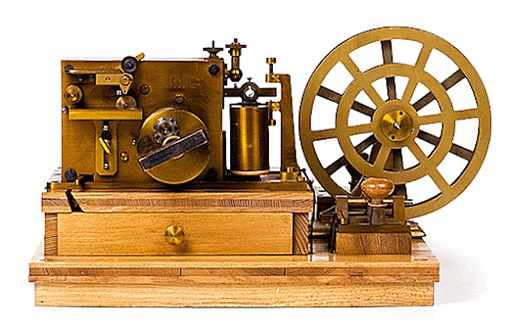
The electrical telegraph was primarily developed in the late 1830s, with key milestones including the 1837 patenting of the needle telegraph by William Cooke and Charles Wheatstone in England, and the 1838 invention of the electromagnetic recording telegraph by Samuel Morse in the U.S.. The first message, “What hath God wrought?”, was sent by Morse in 1844.
Pre-Electric Communication: The Optical Telegraph
Long before wires, humans used visual telegraphy. The word “telegraph” itself comes from the Greek tele (distant) and graphein (to write).
- Ancient Methods: Smoke signals, beacon fires, and drum beats.
- The Chappe Semaphore (1792): Claude Chappe in France invented a system of towers with pivoting shutters or arms. By adjusting these arms into specific positions, operators could transmit messages across hundreds of miles in minutes.
The Birth of the Electric Telegraph (1830s)
The discovery of electromagnetism changed everything. Multiple inventors were racing to use electricity to move needles or marks on paper.
The British Innovation: Cooke and Wheatstone
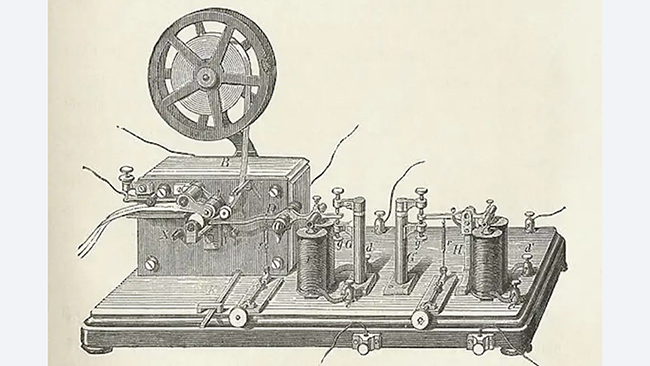
In 1837, William Fothergill Cooke and Charles Wheatstone patented a five-needle telegraph. It didn’t require a code; the needles simply pointed to letters on a diamond-shaped board. It was used primarily for the burgeoning British railway system.
The American Revolution: Samuel Morse
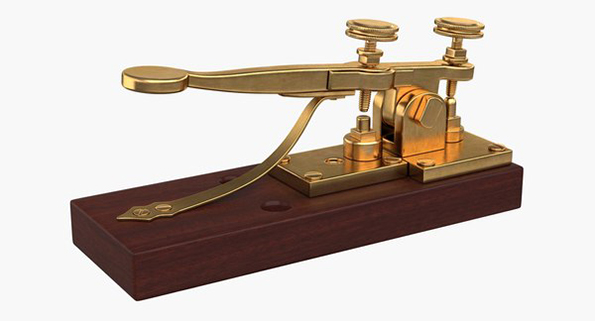
Samuel Morse, along with Alfred Vail, developed a much simpler system. Instead of needles, they used a single circuit that opened and closed.
- Morse Code: This was the true stroke of genius. By representing letters as “dots” and “dashes” (short and long pulses), they made communication efficient and durable over long distances.
- The First Message (1844): “What hath God wrought!” sent from Washington D.C. to Baltimore.
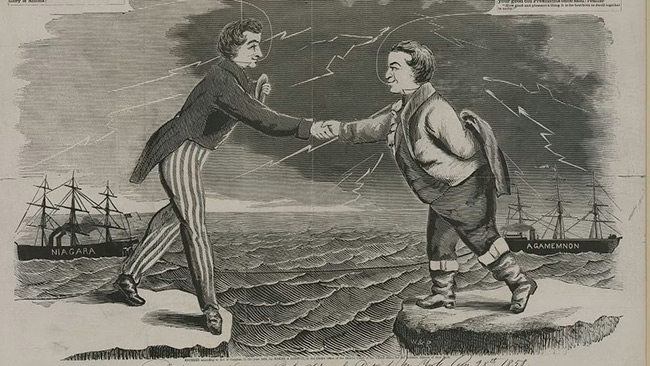
Wiring the World: The Transatlantic Cable
By the 1850s, landlines covered much of the US and Europe. But the ocean remained a barrier.
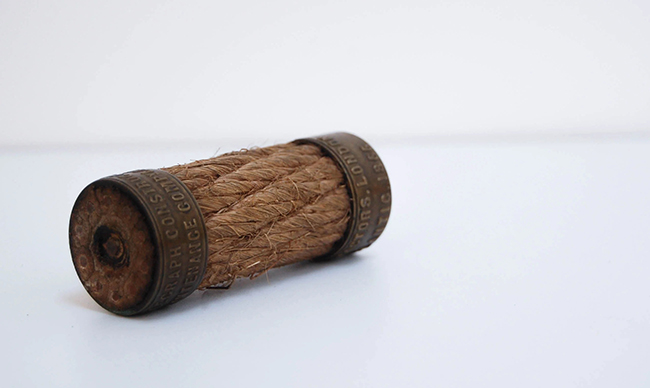
- Cyrus Field’s Ambition: After several heart-breaking failures and snapped cables, the first successful permanent Transatlantic cable was laid in 1866.
- Impact: Communication between London and New York dropped from 10 days (by ship) to mere minutes.
The Golden Age and Technical Refinements
The late 19th century saw the telegraph become the backbone of global commerce, journalism, and warfare.
- The Duplex and Quadruplex: Thomas Edison (yes, that Edison) invented the quadruplex telegraph, which allowed four messages to travel over the same wire simultaneously, vastly increasing profit.
- The Teletypewriter: Eventually, the “key” was replaced by a keyboard, and the “sounder” was replaced by a printer, leading to the Telex systems used well into the 20th century.
The Decline and Digital Legacy
The telegraph didn’t die overnight. It evolved.
- The Telephone: Alexander Graham Bell was actually trying to improve the telegraph when he discovered how to transmit voice.
- Wireless Telegraphy: Guglielmo Marconi used radio waves to send Morse code without wires, leading to the birth of radio.
- The End of an Era: Western Union sent its final telegram in 2006. India’s state-run telegram service (BSNL) shut down in 2013.
Summary of the Telegraph’s Evolution
| Era | Technology | Key Figure | Primary Use |
| Late 1700s | Optical Semaphore | Claude Chappe | Military/Government |
| 1830s-40s | Electric Needle/Morse | Morse & Wheatstone | Railways & News |
| 1860s | Submarine Cables | Cyrus Field | International Trade |
| 1900s | Wireless Telegraphy | Guglielmo Marconi | Maritime Safety/Radio |
Why the Telegraph Still Matters
The telegraph established the binary logic (dots/dashes) that eventually led to the 1s and 0s of modern computing. It taught us how to live in a “shrunken” world where news is instant.
The evolution of the telegraph stands as one of the most significant turning points in human history, marking the true dawn of the information age. By shattering the biological limitations of distance, it transformed communication from the speed of a horse to the speed of light.
This technological leap did more than just send messages; it revolutionized global commerce, birthed modern journalism, and redefined the complexities of international diplomacy. While the physical clicking of the telegraph key has long been silenced by the digital hum of the internet, its legacy remains deeply embedded in our modern world.
The binary logic of Morse code served as the conceptual forefather to the digital bits and bytes that power our smartphones and fiber-optic networks today. Ultimately, the telegraph proved that connectivity is a fundamental human need, laying the essential groundwork for every telecommunication breakthrough that followed.
sources
The Library of Congress (Samuel Morse Papers)
“The Origins of the Telegraph.” The Franklin Institute.
“The Telegraph in America, 1832–1920” by David Hochfelder
“Invention of the Telegraph.” Library of Congress Digital Collections.

