

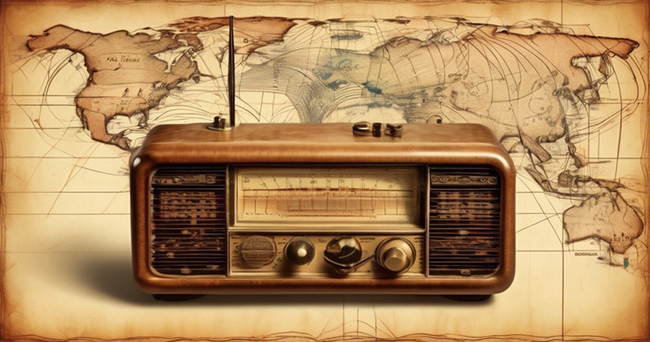
The Evolution of Radio: From Electromagnetic Waves to Digital Sound
Radio is one of the most transformative inventions in human history. Long before television, the internet, or smartphones, radio connected people across vast distances using invisible electromagnetic waves. It revolutionized communication, shaped global politics, influenced culture, and provided entertainment and information to millions.
Even in the digital age, radio remains relevant, evolving through new technologies while preserving its core purpose: transmitting sound wirelessly to a mass audience.
The evolution of radio is not the achievement of a single inventor but the result of centuries of scientific discovery, experimentation, and innovation. From theoretical physics to modern digital streaming, radio’s journey reflects humanity’s growing mastery over energy, waves, and information.
Scientific Foundations of Radio Communication
Early Understanding of Electricity and Magnetism
The roots of radio can be traced back to the study of electricity and magnetism in the 18th and 19th centuries. Scientists such as Michael Faraday demonstrated the relationship between electric and magnetic fields. Faraday’s experiments on electromagnetic induction showed that electricity and magnetism were interconnected forces.
James Clerk Maxwell and Electromagnetic Theory
In the 1860s, Scottish physicist James Clerk Maxwell unified electricity and magnetism through a set of mathematical equations known as Maxwell’s equations. These equations predicted the existence of electromagnetic waves that could travel through space at the speed of light.
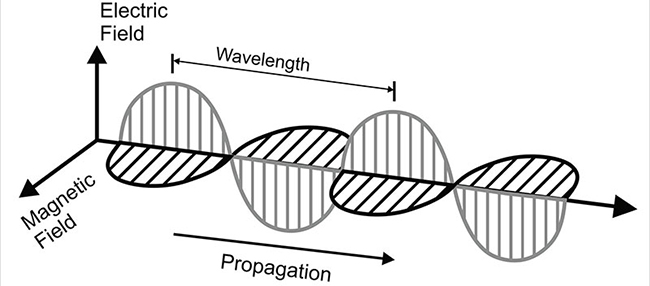
Maxwell’s work was revolutionary because it suggested that energy could move through empty space without wires—an idea that was purely theoretical at the time but crucial to the future development of radio.
Heinrich Hertz and Experimental Proof
In 1887, German physicist Heinrich Hertz experimentally confirmed Maxwell’s theories. Hertz generated and detected electromagnetic waves in his laboratory, proving that they behaved like light waves. Although Hertz did not see commercial value in his discovery, his experiments demonstrated that wireless communication was scientifically possible.
Birth of Wireless Telegraphy
Early Wireless Experiments
Following Hertz’s discoveries, several inventors sought practical applications for electromagnetic waves. Early experiments focused on wireless telegraphy, which involved transmitting coded signals (usually Morse code) without physical connections.
Guglielmo Marconi and Practical Radio
The most influential figure in early radio development was Guglielmo Marconi, an Italian inventor. In the 1890s, Marconi developed a system capable of transmitting wireless signals over long distances. He improved antennas, transmitters, and receivers, making wireless communication reliable.
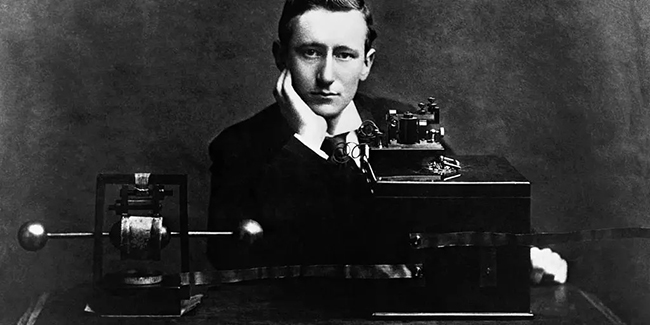
In 1901, Marconi successfully transmitted a radio signal across the Atlantic Ocean—from England to Newfoundland. This achievement proved that radio waves could travel beyond the Earth’s curvature and marked the beginning of global wireless communication.
Radio in Maritime Communication
One of the earliest and most important uses of radio was in maritime communication. Ships used wireless telegraphy to send distress signals and navigation messages. The importance of radio became evident during the Titanic disaster in 1912, when radio operators transmitted distress calls that helped save hundreds of lives.
Transition from Signals to Sound
Reginald Fessenden and Voice Transmission
While early radio was limited to Morse code, the next major breakthrough was the transmission of human voice and music. In 1906, Canadian inventor Reginald Fessenden conducted the first successful radio broadcast of speech and music. His Christmas Eve broadcast included a violin performance and a spoken message.
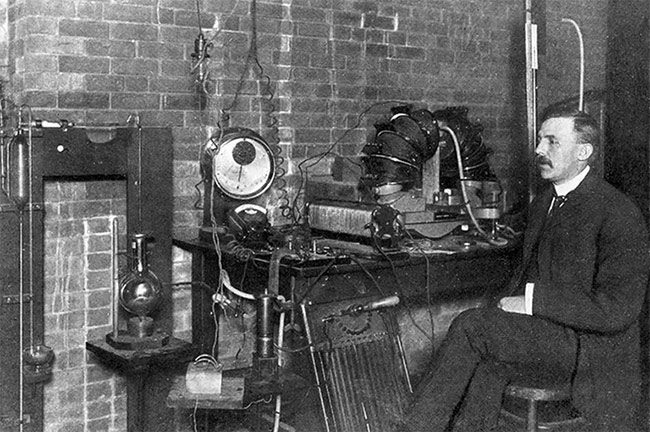
This event marked the transformation of radio from a technical communication tool into a medium capable of mass entertainment and information sharing.
Development of Vacuum Tube Technology
The invention of the vacuum tube, particularly the triode amplifier by Lee de Forest, greatly enhanced radio transmission and reception. Vacuum tubes allowed signals to be amplified, making long-distance broadcasting of sound possible.
The Rise of Broadcasting and Mass Communication
Early Radio Broadcasting
The 1920s witnessed the birth of commercial radio broadcasting. Radio stations began transmitting scheduled programs, including news, music, weather reports, and entertainment. In 1920, station KDKA in Pittsburgh made one of the first commercial broadcasts, reporting the U.S. presidential election results.
The Golden Age of Radio (1920s–1940s)
The period from the 1920s to the 1940s is often called the Golden Age of Radio. During this time, radio became the primary source of entertainment and information for households.
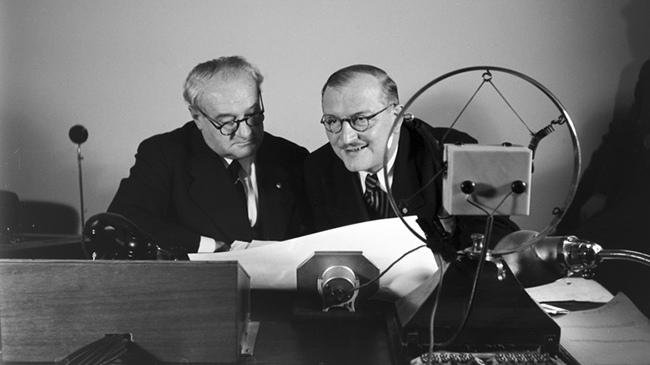
Popular radio content included:
- News and political speeches
- Radio dramas and soap operas
- Comedy shows
- Live music and orchestras
- Sports commentary
Radio played a crucial role during World War II, providing news, government announcements, and morale-boosting programs. Leaders used radio to address entire nations, making it a powerful political tool.
Technological Advancements in Radio Transmission
Amplitude Modulation (AM)
Early radio broadcasts used Amplitude Modulation (AM), where the strength of the signal varies with the sound. While effective, AM was prone to noise and interference, especially from electrical sources.
Frequency Modulation (FM)
In the 1930s, American engineer Edwin Howard Armstrong invented Frequency Modulation (FM) radio. FM offered clearer sound quality and greater resistance to interference compared to AM.
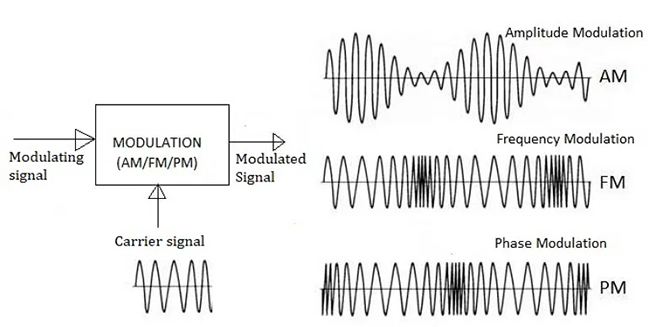
Although FM took time to gain widespread acceptance, it eventually became the standard for music broadcasting due to its superior audio quality.
The Transistor Revolution
Invention of the Transistor
The invention of the transistor in 1947 at Bell Laboratories marked a turning point in electronics. Transistors replaced bulky vacuum tubes, making radio sets smaller, more efficient, and more durable.
Portable Radios and Youth Culture
By the 1950s and 1960s, transistor radios became affordable and portable. People could listen to music and news anywhere—at home, on the street, or at the beach.
This portability contributed to the rise of youth culture, as radio played a major role in spreading rock and roll, pop music, and new cultural movements.
Radio and the Challenge of Television
With the rise of television in the 1950s, radio faced competition as a home entertainment medium. However, radio adapted by changing its format.
Format Specialization
Radio stations began specializing in specific formats, such as:
- Music-only stations
- Talk radio
- News and traffic updates
- Religious and educational programming
This specialization allowed radio to maintain its relevance by serving targeted audiences.
Digital Radio and Satellite Broadcasting
Digital Audio Broadcasting (DAB)
Advances in digital technology led to Digital Audio Broadcasting (DAB), which offers improved sound quality, efficient use of spectrum, and additional data services such as song titles and traffic updates.
Satellite Radio
Satellite radio uses satellites to transmit signals over wide geographic areas. It provides hundreds of channels with minimal interference and is especially popular in vehicles and remote regions.
Internet Radio and the Modern Era
Online Streaming and Web Radio
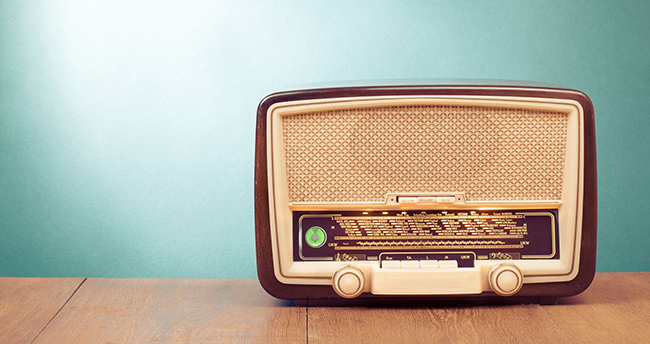
The internet transformed radio once again. Internet radio stations can broadcast globally without traditional frequency limitations. Listeners can access content from anywhere in the world using smartphones, computers, and smart speakers.
Podcasts and On-Demand Audio
Podcasts represent a modern extension of radio principles. They allow users to listen to recorded programs at their convenience, covering topics from education and history to entertainment and journalism.
Social and Cultural Impact of Radio
Radio has played a vital role in:
- Spreading education and literacy
- Connecting rural and remote communities
- Broadcasting emergency alerts and disaster information
- Preserving language, music, and cultural identity
In many developing regions, radio remains the most accessible and affordable medium of communication.
The evolution of radio is a remarkable story of scientific curiosity, technological innovation, and cultural transformation. From Maxwell’s equations to digital streaming platforms, radio has continuously adapted to changing times and technologies.
Despite competition from television and the internet, radio has never disappeared. Instead, it has reinvented itself—becoming more portable, more specialized, and more interactive. Today, radio exists not only as traditional broadcasts but also as digital streams, podcasts, and satellite services.
As long as humans value the power of voice, music, and storytelling, radio will continue to evolve—remaining a timeless and essential medium of communication.
Sources
History.com – Invention of the Radio
Encyclopaedia Britannica – Radio | History & Development
IEEE Global History Network – History of Radio Technology
Library of Congress (USA) – Radio Broadcasting History Collections
BBC – History of Broadcasting – Early Radio and Mass Communication


[…] The Evolution of Radio: From Electromagnetic Waves to Digital Sound […]
[…] The Evolution of Radio: From Electromagnetic Waves to Digital Sound […]