

The Evolution of Flight: From the Wright Brothers to the Future of Aviation
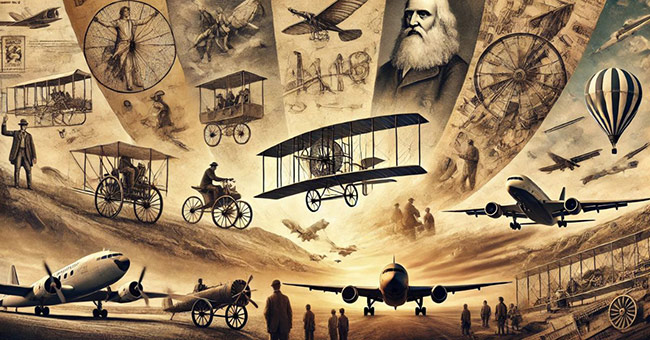
The story of the airplane is a testament to human audacity. In just over a century, we went from wood-and-fabric gliders to carbon-fiber jets that can cross oceans in hours.
1. The Pre-Flight Era: Dreams and Da Vinci
Before engines, there was observation. For centuries, humans looked at birds and tried to mimic them.
- Leonardo da Vinci (15th Century): Produced over 500 sketches of flying machines, including the Ornithopter. While they never flew, they established the idea of mechanical flight.
- Sir George Cayley (Early 1800s): Often called the “Father of Aviation.” He identified the four forces of flight: Lift, Weight, Thrust, and Drag.
2. The Pioneer Era (1900–1914)
Everything changed on December 17, 1903.
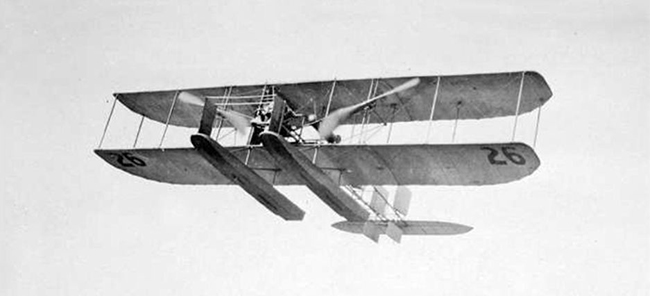
- The Wright Brothers: Orville and Wilbur Wright achieved the first powered, controlled, and sustained flight of a heavier-than-air aircraft at Kitty Hawk.
- Design: Early planes were “Biplanes” (two sets of wings) made of spruce wood and Irish linen. They were incredibly fragile and lacked a cockpit—pilots often lay flat on the lower wing.
3. World War I: The Great Accelerator
War, while tragic, is a massive catalyst for tech. In 1914, planes were for scouting; by 1918, they were weapons.
- Innovation: Introduction of the “Synchronizer gear,” allowing machine guns to fire through spinning propellers without hitting the blades.
- Materials: Transition from wood to metal frames began, and engines became much more reliable.
4. The Golden Age (1918–1939)
This was the era of records and “Barnstorming.”
- Charles Lindbergh (1927): His solo flight across the Atlantic proved that long-distance air travel was possible.
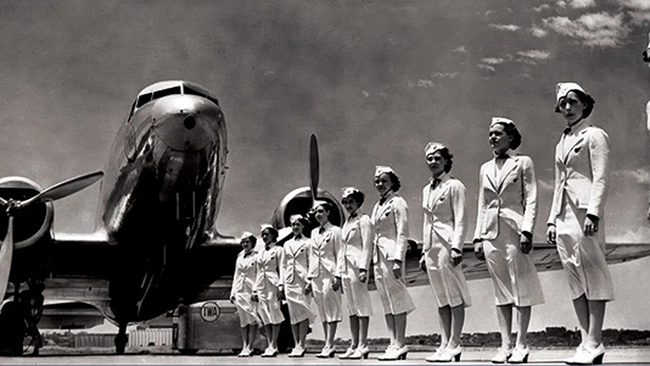
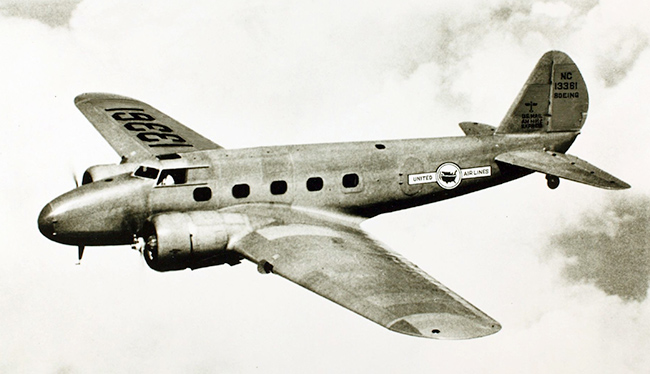
- The DC-3: Introduced in the 1930s, it was the first plane that made passenger travel profitable without government mail subsidies. It redefined “Commercial Aviation.”
5. The Jet Age (1945–1970)
World War II gave us the jet engine. After the war, the focus shifted from “How do we stay up?” to “How fast can we go?”
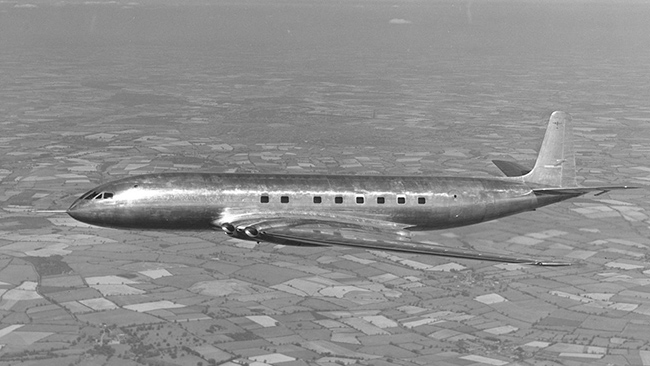
- The Comet and the 707: The de Havilland Comet was the first commercial jet, but the Boeing 707 truly ushered in the “Jet Age” in 1958, making international travel accessible to the middle class.
- Supersonic Flight: In 1947, Chuck Yeager broke the sound barrier ($Mach 1$). This culminated in the Concorde, which could fly from London to New York in under 3.5 hours.
6. Modern Aviation & Efficiency (1980–2020)
As fuel prices rose, the goal shifted to efficiency and capacity.
- The Jumbo Jet: The Boeing 747 dominated for decades, carrying hundreds of people at once.
- Fly-by-Wire: Mechanical cables were replaced by electronic interfaces, making planes safer and easier to handle.
- Composite Materials: Modern planes like the Boeing 787 Dreamliner use carbon fiber instead of aluminum, making them lighter and more fuel-efficient.
7. The Future: 2026 and Beyond
Today, we are in the midst of the “Third Revolution” in aviation.
- Electric and Hybrid Planes: Companies like Eviation and Heart Aerospace are testing short-haul electric flights to reduce carbon footprints.
- Sustainable Aviation Fuel (SAF): Moving away from kerosene toward fuels made from waste oils and plants.
- Hypersonic Travel: Research into $Mach 5+$ travel is resurfacing, aiming to connect any two points on Earth in under two hours.
Comparison of Eras
| Era | Primary Material | Power Source | Key Milestone |
| Pioneer | Wood / Fabric | Piston Engine | First flight (1903) |
| WWII | Aluminum | Advanced Piston/Jet | Introduction of Jet engines |
| Golden Age | Aluminum | Jet / Turbofan | Mass international travel |
| Modern | Composites | High-bypass Turbofan | Digital cockpits & Efficiency |
| Future | Carbon Fiber | Electric / Hydrogen | Zero-emission flight |
The evolution of the airplane stands as a pinnacle of human engineering and ambition. From the Wright brothers’ fragile wood-and-linen glider to the carbon-fiber jets of today, aviation has fundamentally reshaped our world by turning months of travel into mere hours.
The industry survived the transition from propeller-driven crafts to the roaring Jet Age, continually pushing the boundaries of speed, safety, and global connectivity for all. As we look toward the future from 2026, the focus has shifted toward a greener horizon.
Innovation is no longer measured solely by Mach speed, but by carbon neutrality. Sustainable aviation fuels and electric propulsion are the new frontiers of flight. Autonomous systems and AI are redefining the safety and efficiency of the modern cockpit.
The sky is no longer a barrier but a gateway for sustainable urban and global mobility. Ultimately, the story of flight is a testament to the power of relentless human curiosity. As technology advances, the dream of the horizon continues to inspire the next generation.
Sources
Smithsonian National Air and Space Museum: The gold standard for aviation history.
The Wright Brothers National Memorial (National Park Service): For accurate details on the first flight.
Federal Aviation Administration (FAA) Historical Archives: Great for technical and regulatory evolution.
NASA (Aeronautics Research Mission Directorate): Best for information on supersonic and future flight technology.

