

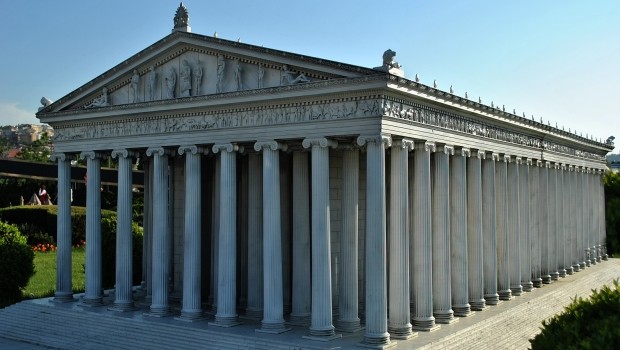
Temple of Artemis at Ephesus: The Lost Wonder of the Ancient World
The Temple of Artemis at Ephesus, located in present-day Selçuk, Turkey, was one of the most magnificent religious structures of the ancient world. Celebrated as one of the Seven Wonders of the Ancient World, the temple symbolized not only extraordinary architectural achievement but also the deep religious, cultural, and economic life of ancient Anatolia and the Greek world.
Dedicated to Artemis, the Greek goddess of the hunt, fertility, and nature, the temple stood as a sacred center for centuries before its eventual destruction. Unlike many ancient monuments that survive in impressive ruins, the Temple of Artemis has largely vanished, leaving behind only fragments and archaeological traces.
Yet its legacy continues to inspire historians, archaeologists, architects, and travelers alike. This article explores the history, architecture, religious significance, destruction, rediscovery, and enduring legacy of the Temple of Artemis at Ephesus.
Geographic and Historical Background of Ephesus
Location
Ephesus was an ancient Greek city located on the western coast of Anatolia, near the Aegean Sea. Though today it lies several kilometers inland due to silting of the harbor, in antiquity it was a thriving port city and one of the most important urban centers of the ancient Mediterranean world.
Importance of Ephesus
Ephesus flourished as:
- A major trade hub
- A center of Greek culture and learning
- A key city under Lydian, Persian, Greek, and Roman rule
The wealth generated by commerce allowed the city to fund monumental projects, none more ambitious than the Temple of Artemis.
Artemis of Ephesus: Goddess of Fertility and Protection
Artemis in Greek Religion
In Greek mythology, Artemis was the daughter of Zeus and Leto and the twin sister of Apollo. She was commonly worshipped as:
- Goddess of the hunt
- Protector of wildlife
- Guardian of young women
- Lunar deity
The Ephesian Artemis
The Artemis worshipped in Ephesus was distinct from the classical Greek image. The Ephesian Artemis was:
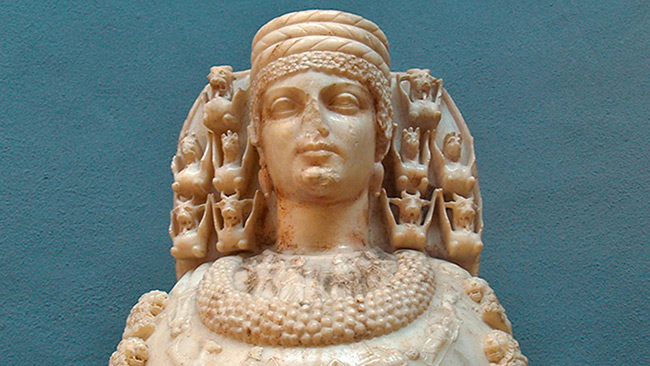
- Associated with fertility and motherhood
- Often depicted with multiple rounded forms on her chest, interpreted as breasts, eggs, or bull testicles
- A fusion of Greek and Anatolian mother goddess traditions
This unique form of Artemis made Ephesus a major pilgrimage center, attracting worshippers from across the ancient world.
Early Origins of the Temple
Pre-Greek Sacred Site
Archaeological evidence suggests that the site of the Temple of Artemis had been sacred long before Greek settlement. Indigenous Anatolian communities likely worshipped a mother goddess at this location as early as the Bronze Age.
The First Temple
The earliest known temple structures date to around the 8th century BCE, built primarily of wood and mudbrick. These early versions were modest compared to the later marble temple but established the site’s religious importance.
The Great Marble Temple (6th Century BCE)
Construction Under Croesus
The most famous version of the Temple of Artemis was constructed around 560 BCE, during the reign of King Croesus of Lydia, one of the wealthiest rulers of antiquity.
Architects
The temple was designed by:
- Chersiphron
- Metagenes (his son)
Scale and Dimensions
The temple was enormous for its time:
- Length: approximately 137 m (450 ft)
- Width: approximately 69 m (225 ft)
- Columns: 127 Ionic columns, each about 18 meters (60 feet) high
It was the first large Greek temple built entirely of marble, setting a new standard in monumental architecture.
Architectural Features
Ionic Order
The temple was built in the Ionic architectural style, characterized by:
- Slender columns
- Scroll-shaped volutes on column capitals
- Graceful proportions
Layout
- The temple stood on a raised platform
- It was surrounded by columns on all sides (a dipteral design)
- The inner sanctuary (cella) housed the cult statue of Artemis
Artistic Decoration
The temple was lavishly decorated with:
- Sculpted column bases
- Relief carvings of mythological scenes
- Bronze and gold offerings donated by worshippers and kings
Ancient writers described the temple as dazzling in the sunlight, its white marble reflecting brilliance across the plain of Ephesus.
Religious and Social Functions
Center of Worship
The Temple of Artemis was the heart of religious life in Ephesus. Festivals in honor of Artemis included:
- Processions
- Music and dance
- Athletic and artistic competitions
Economic Role
Beyond religion, the temple functioned as:
- A treasury
- A place of asylum
- A center for commerce and banking
Merchants, pilgrims, and artisans benefited from the constant flow of visitors.
Destruction by Fire (356 BCE)
Herostratus and the Fire
In 356 BCE, the temple was deliberately burned down by a man named Herostratus, who sought fame by destroying something magnificent.
Ancient historians note an eerie coincidence: the fire occurred on the same night Alexander the Great was born.
Aftermath
Herostratus was executed, and his name was banned from mention—though ironically it survived through historical records.
Rebuilding in Greater Splendor
Support from Alexander the Great
After the fire, the Ephesians rebuilt the temple on an even grander scale. Alexander the Great reportedly offered to fund reconstruction, though the city preferred to finance it themselves.
Second Great Temple
The rebuilt temple:
- Maintained the same general layout
- Featured even richer decoration
- Became the version most commonly praised by ancient writers
It was this temple that firmly secured its place among the Seven Wonders of the Ancient World.
The Temple in the Roman Period
Under Roman rule, Ephesus reached its peak population and prosperity. The Temple of Artemis remained:
- A functioning religious sanctuary
- A symbol of civic pride
- An international pilgrimage destination
Roman emperors respected and supported the cult, integrating it into imperial religious life.
Decline and Destruction
Rise of Christianity
By the 4th century CE, Christianity had become dominant in the Roman Empire. Pagan temples gradually lost imperial support.
Final Destruction
The temple suffered repeated damage from:
- Gothic raids (3rd century CE)
- Earthquakes
- Stone reuse for other buildings
By the 5th century CE, the temple had effectively ceased to exist.
Rediscovery and Archaeology
19th-Century Excavations
The exact location of the temple was rediscovered in 1869 by British archaeologist John Turtle Wood, after years of excavation.
Archaeological Finds
Excavations revealed:
- Foundations of the temple
- Sculpted column fragments
- Coins and votive offerings
Many artifacts were transported to the British Museum, where they remain today.
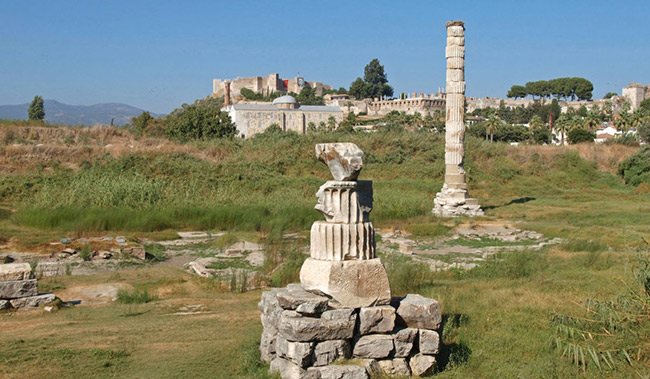
The Temple Today
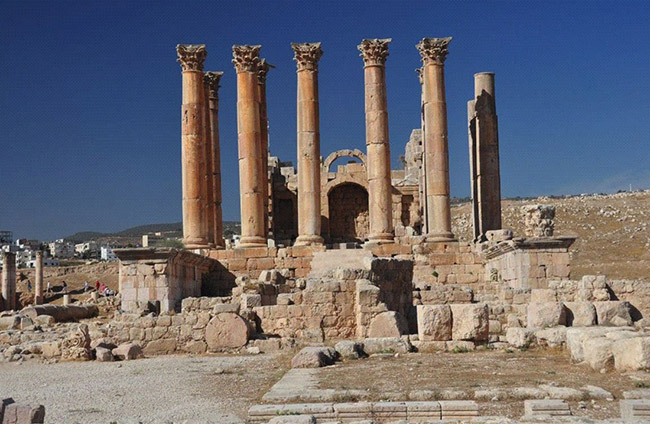
Today, only:
- A reconstructed column
- Foundation stones
- Marshy ground
remain at the original site. Despite its modest appearance, the location is a powerful reminder of the temple’s former glory.
Nearby, visitors can explore:
- The ancient city of Ephesus
- The House of the Virgin Mary
- The Temple of Hadrian
- The Library of Celsus
The Temple of Artemis as a Wonder of the World
Ancient Recognition
Ancient writers such as:
- Antipater of Sidon
- Pliny the Elder
praised the temple as surpassing all other wonders in beauty and scale.
Symbolism
The temple represented:
- Human devotion to the divine
- The artistic and engineering achievements of antiquity
- The cultural blending of Greek and Anatolian traditions
Cultural Legacy
In Literature and Art
The Temple of Artemis has appeared in:
- Classical histories
- Renaissance art
- Modern books and documentaries
Influence on Architecture
Its use of marble, scale, and column design influenced:
- Later Greek temples
- Roman monumental architecture
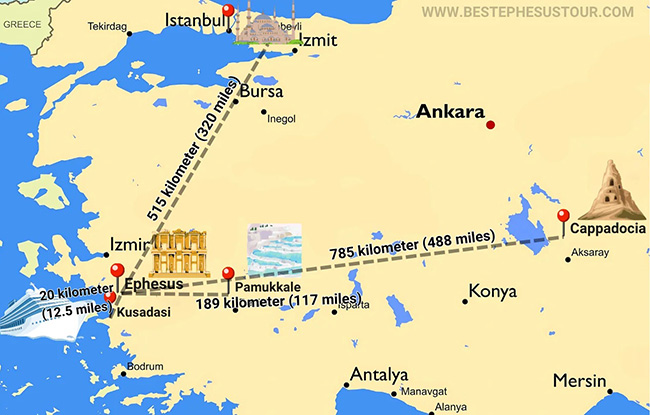
Temple of Artemis at Ephesus Map
The Temple of Artemis at Ephesus was far more than a building—it was a living symbol of faith, artistry, and civic identity. Though time, fire, and human conflict reduced it to ruins, its memory endures as one of humanity’s greatest architectural achievements. As one of the Seven Wonders of the Ancient World, the temple continues to captivate the imagination, reminding us of the heights ancient civilizations could reach when devotion, wealth, and creativity came together.
Even in ruin, the Temple of Artemis stands tall in history—an eternal monument to the brilliance and fragility of human achievement.
Sources
Metropolitan Museum of Art – Heilbrunn Timeline of Art History
Oxford Classical Dictionary, Academic reference for Greek religion and architecture.
Encyclopaedia Britannica, Scholarly overview of the Temple of Artemis and Ephesian Artemis cult.
British Museum Research Publications, Documentation of column fragments, sculptures, and votive objects.

