

Saqqara: The Eternal Stairway to the Stars
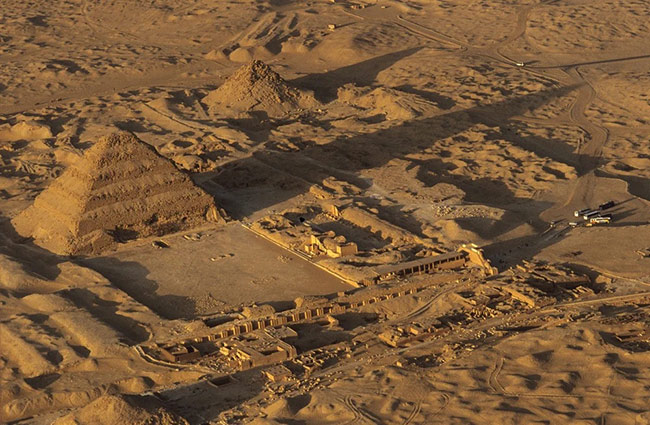
For over 3,000 years, Saqqara was the heartbeat of the Egyptian afterlife. While the Great Pyramids of Giza often steal the spotlight, Saqqara is where the story of the pyramids actually began. Spanning nearly 10 kilometers along the edge of the Western Desert, this vast necropolis served the ancient capital of Memphis. It is a site of “firsts”—the first stone pyramid, the first funerary texts, and the first glimpses into the daily lives of the common man and the elite.
The Dawn of Stone: The Step Pyramid of Djoser
The narrative of Saqqara is inseparable from the Step Pyramid of Djoser (3rd Dynasty, c. 2670 BCE). Before Djoser, kings were buried in rectangular mud-brick structures called mastabas.
The Genius of Imhotep
The transformation of Egyptian architecture is credited to one man: Imhotep. He served as Djoser’s vizier and architect. His radical idea was to stack six mastabas of decreasing size on top of one another. This created a stairway to heaven, a literal “ladder” for the Pharaoh’s soul to ascend to the North Star.
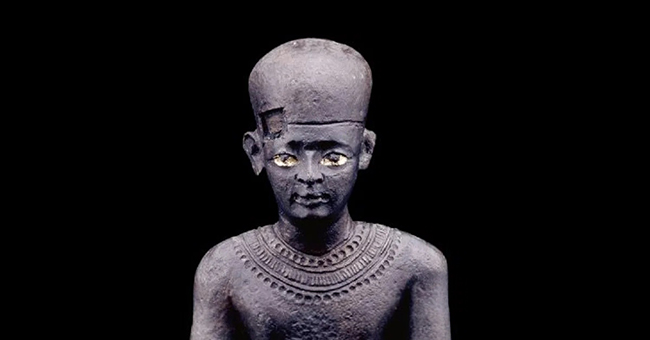
This wasn’t just a change in shape; it was a revolution in material. Imhotep was the first to use cut stone on a massive scale. The Step Pyramid stands roughly 60 meters (197 feet) tall, but what lies beneath is even more complex.
A labyrinth of tunnels, galleries, and shafts stretches for nearly 6 kilometers, designed to house the King’s body and his many treasures while confusing grave robbers.
The Heb-Sed Court
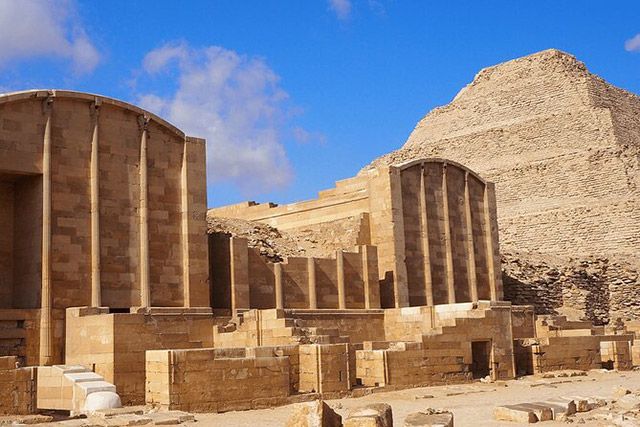
The pyramid is part of a larger walled complex. To the south lies the Heb-Sed Court, a ceremonial space where the Pharaoh would perform a ritual race every 30 years. This race was designed to prove his physical vitality and divine right to continue his reign. Walking through the reconstructed colonnade today, with its 40 stone pillars carved to look like bundles of reeds, one can almost hear the echoes of ancient cheers.
The Evolution of the Pyramid: From Steps to Smooth Sides
Saqqara tracks the “trial and error” phase of Egyptian pyramid building. Following Djoser, other Old Kingdom Pharaohs sought to refine the design.
The Pyramid of Unas: The First Voice
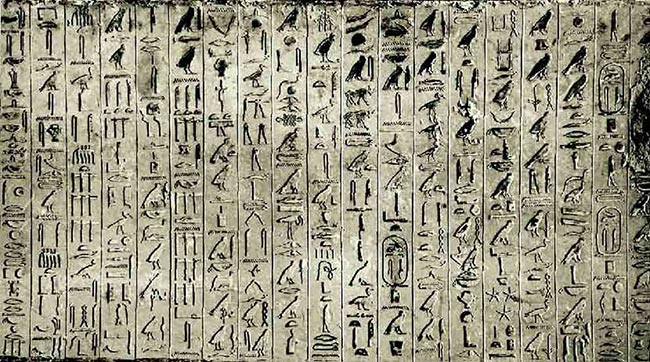
The Pyramid of Unas (5th Dynasty) may look like a heap of rubble from the outside, but its interior is revolutionary. It is the first pyramid to feature Pyramid Texts. These are blue-pigmented hieroglyphic spells carved directly into the limestone walls. They were intended to guide the King through the dangers of the underworld and ensure his transformation into an Akh (a transfigured spirit).
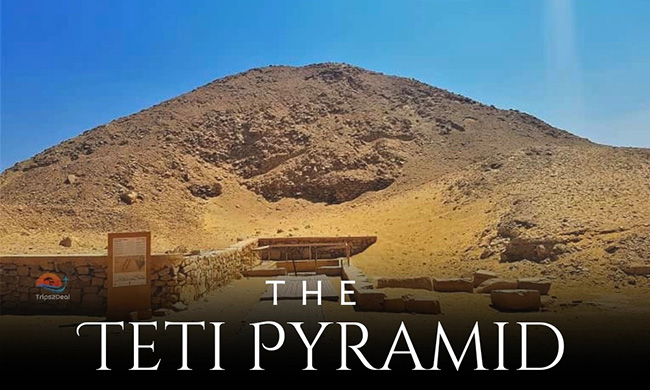
The Pyramid of Teti
Nearby, the Pyramid of Teti (6th Dynasty) allows visitors to descend into the burial chamber. Though the pyramid’s exterior has succumbed to time, the basalt sarcophagus inside remains remarkably preserved, and the walls are covered in the same protective spells found in Unas’s tomb.
The Serapeum: The Mystery of the Sacred Bulls
Perhaps the most eerie and awe-inspiring site in Saqqara is the Serapeum. Discovered by Auguste Mariette in 1850, this underground gallery is a series of long, dark tunnels containing 24 massive granite and basalt sarcophagi.
These were not for humans, but for the Apis Bulls. In ancient Memphis, a single bull was chosen as the living incarnation of the god Ptah. When the bull died, it was mummified with the honors of a king and buried here.
The mystery lies in the engineering. Each sarcophagus weighs between 60 and 80 tons, and their lids alone weigh 30 tons. How these massive blocks were moved into narrow underground chambers and polished to a mirror-like finish remains a subject of intense debate among historians and engineers alike.
The Art of Daily Life: The Mastabas of the Nobles
While the pyramids focus on the Pharaoh’s journey to the stars, the Mastabas (tombs) of the high-ranking officials tell the story of life on Earth.
The Tomb of Ti
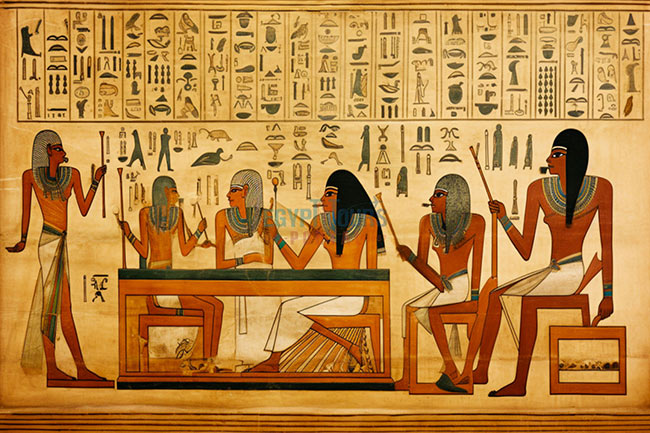
Ti was a high official during the 5th Dynasty. His tomb is a masterpiece of Old Kingdom art. The reliefs are so detailed they act as an encyclopedia of ancient life. You can see:
- Workers harvesting grain and treading grapes.
- Shipbuilders constructing papyrus boats.
- Ti standing on a boat in the marshes, hunting hippopotami and crocodiles.
- Musicians playing harps and flutes for the deceased.
The Tomb of Kagemni
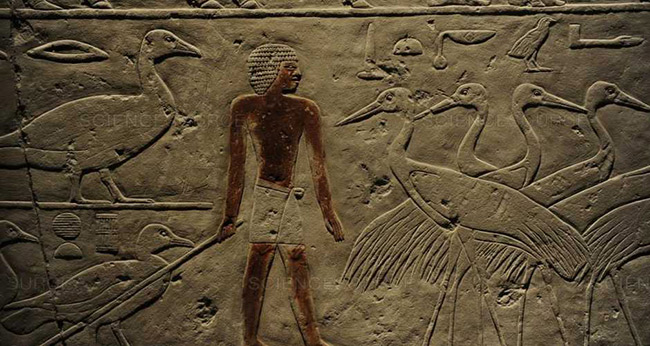
Located near the Pyramid of Teti, this tomb is famous for its depictions of animals. There are scenes of dancing, birds being caught in nets, and even a scene of a mother cow being milked. These carvings weren’t just decorative; they were “magical backups.” If the physical offerings of food failed, the images on the walls would come to life in the afterlife to provide for the soul.
The New Kingdom: A Return to Roots
Even after the royal capital moved south to Luxor (Thebes) during the New Kingdom, Saqqara remained a prestigious place to be buried.
One of the most significant finds here is the Tomb of Horemheb. Before he became the last Pharaoh of the 18th Dynasty, Horemheb was a powerful general. He built a magnificent private tomb at Saqqara. Though he was eventually buried in the Valley of the Kings, his Saqqara tomb contains some of the most sophisticated military reliefs in Egypt, showing his campaigns and his interactions with foreign delegates.
The Bubasteion and the Animal Mummies
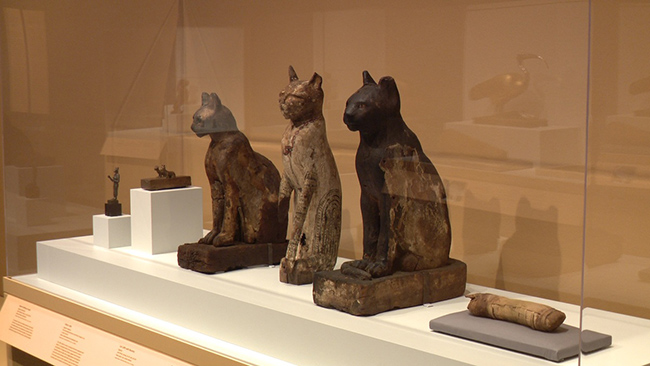
In the later periods of Egyptian history, Saqqara became a center for the cult of animal worship. The Bubasteion is an area dedicated to the cat-goddess Bastet.
Archaeologists have discovered thousands of cat mummies here, along with crocodiles, ibises, and falcons. Pilgrims would buy these mummies as votive offerings to the gods, much like one might light a candle in a cathedral today. Recent excavations in 2019 and 2020 uncovered rare lion cub mummies and dozens of bronze statues of the god Osiris in this sector.
The “Mega-Excavations” (2020–Present)
Saqqara is currently the world’s most exciting archaeological “hotspot.” Using modern technology like ground-penetrating radar and satellite imaging, archaeologists are finding things that were missed for centuries.
- The Funerary Temple of Queen Nearit: Discovered in 2021, this temple belonged to the wife of King Teti.
- The Wahtye Tomb: A 4,400-year-old tomb belonging to a high priest, found in pristine condition with vibrant colors and 55 statues carved into the walls.
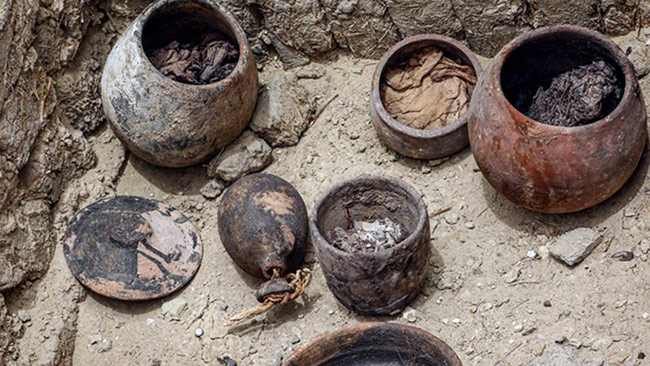
- Mummification Workshops: In 2023, researchers found the actual workshops where bodies were prepared, complete with the jars that once held the oils and resins used for preservation.
Why Saqqara Matters
Saqqara is the “DNA” of Ancient Egypt. At Giza, the pyramids are finished products—perfect, silent, and imposing. At Saqqara, you see the process. You see the transition from brick to stone, the birth of religious literature, and the shift from royal exclusivity to a more personal religion for the nobility.
It is a site that bridges the gap between the mythical and the historical. Standing in the shadow of Djoser’s pyramid, you are standing at the very moment humanity decided to build toward the sky.
Saqqara Pronunciation
Saqqara is typically pronounced suh-KAH-ruh in English. The emphasis is on the second syllable (“KAH”). It can also be heard as sah-KAH-rah in some contexts, but the English pronunciation usually stresses the middle syllable with a soft “uh” sound at the start.
Saqqara is not just a graveyard, it is a testament to human persistence and the obsession with eternity. Whether you are mesmerized by the mathematical precision of the Step Pyramid or the haunting silence of the Serapeum, Saqqara offers an intimate look at the civilization that shaped the modern world. For any traveler or history enthusiast, it is the true heart of Egypt.
References
UNESCO World Heritage Centre
The Saqqara Saite Tombs Project
Smithsonian Magazine & National Geographic
The Ministry of Tourism and Antiquities (Egypt)

