

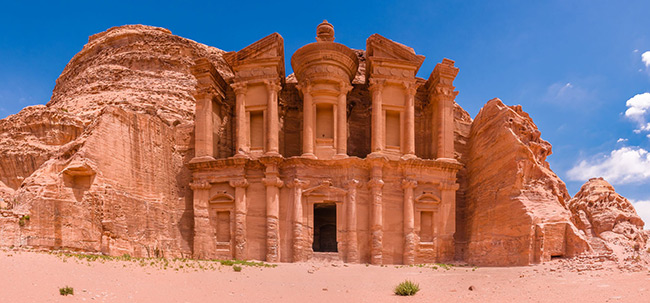
Petra, Jordan: The Rose-Red City of the Nabataeans
Petra, one of the world’s most breathtaking archaeological sites, lies hidden among the rugged mountains and desert canyons of southern Jordan. Often called the “Rose-Red City” because of the pinkish hue of its stone, Petra is not merely a collection of ancient ruins—it is a testament to human ingenuity, artistic excellence, and cultural exchange.
Carved directly into sandstone cliffs more than 2,000 years ago, Petra once stood at the heart of vital trade routes linking Arabia, Egypt, and the Mediterranean world. Rediscovered by the Western world in 1812, Petra has since become one of the most celebrated heritage sites on Earth.
In 1985, it was designated a UNESCO World Heritage Site, and in 2007 it was named one of the New Seven Wonders of the World. Today, Petra continues to fascinate historians, archaeologists, and travelers alike with its mysterious past and monumental beauty.
Geographical Setting
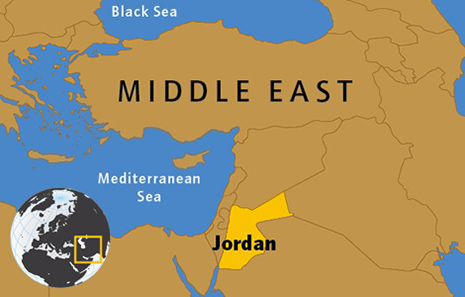
Petra is located in southern Jordan, approximately 240 kilometers south of Amman and about 130 kilometers north of the Red Sea port city of Aqaba. The city is nestled within a mountainous basin surrounded by sandstone cliffs, accessible primarily through a narrow gorge known as the Siq.
The region’s dramatic landscape—steep rock faces, winding canyons, and desert plateaus—played a crucial role in Petra’s defense and prosperity. Natural rock formations provided protection from invaders, while seasonal water sources enabled settlement in an otherwise arid environment.
Origins and Early History
Although archaeological evidence suggests human presence in the Petra region as early as 7000 BCE, the city rose to prominence under the Nabataean civilization around the 4th century BCE.
The Nabataeans
The Nabataeans were an Arab nomadic people who gradually settled and developed a powerful kingdom centered on trade. They controlled key caravan routes that transported valuable goods such as:
- Frankincense and myrrh from southern Arabia
- Spices from India
- Silk from China
- Gold and perfumes from Egypt
By monopolizing these trade networks, the Nabataeans amassed great wealth and transformed Petra into a thriving commercial hub.
Petra as a Trade Capital
Petra’s strategic location made it a crossroads between the Arabian Peninsula, the Levant, and the Mediterranean world. Caravans passed through the city, paying taxes and purchasing supplies, which contributed significantly to the Nabataean economy.
Unlike many ancient cities built on open plains, Petra was carefully concealed within the mountains. This natural secrecy allowed the Nabataeans to protect their riches while maintaining strong control over regional trade.
Architectural Marvels
One of Petra’s most extraordinary features is its architecture. Rather than constructing buildings with stone blocks, the Nabataeans carved entire structures directly into rock faces.
The Siq
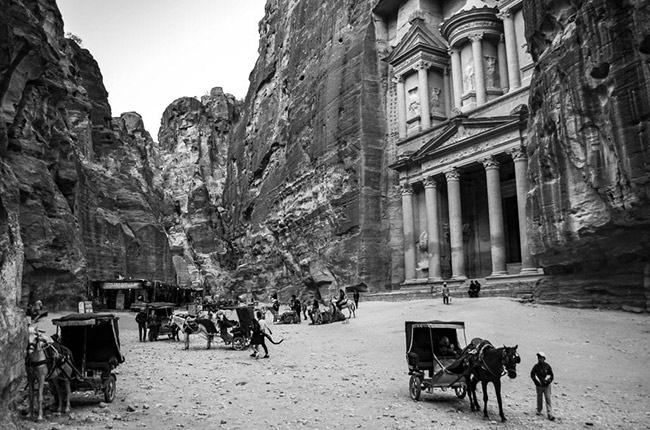
The journey into Petra begins through the Siq, a narrow, winding gorge stretching over 1.2 kilometers. Towering cliffs rise up to 80 meters on either side, creating a dramatic and suspenseful entrance. Along the Siq, visitors can still see ancient water channels, inscriptions, and carvings.
Al-Khazneh (The Treasury)
At the end of the Siq stands Petra’s most iconic monument: Al-Khazneh, or The Treasury. Standing about 40 meters high, its elaborate façade features:
- Corinthian columns
- Sculpted figures of gods and mythological beings
- A blend of Hellenistic, Egyptian, and Near Eastern styles
Despite its name, Al-Khazneh was likely a royal tomb or ceremonial structure, not a treasury.
The Street of Facades
Beyond the Treasury lies the Street of Facades, lined with monumental tombs carved into cliff walls. These structures reflect the social hierarchy of Nabataean society, with more elaborate tombs belonging to elite families.
The Theatre
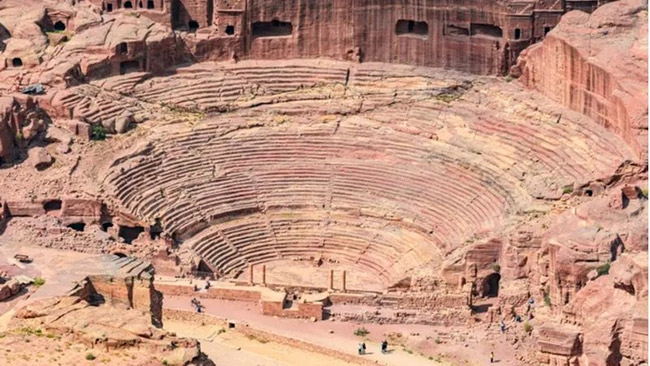
Petra also contains a large theatre, carved partly into the rock and capable of seating over 8,000 spectators. Originally built by the Nabataeans and later modified by the Romans, it demonstrates Petra’s cultural sophistication.
Royal Tombs
High above the city are the Royal Tombs, including:
- The Urn Tomb
- The Silk Tomb
- The Corinthian Tomb
- The Palace Tomb
These grand structures likely belonged to Nabataean kings and nobles.
Ad-Deir (The Monastery)
Located atop a steep mountain path, Ad-Deir, or The Monastery, is one of Petra’s largest monuments. Simpler in decoration than the Treasury but monumental in scale, it probably served religious purposes. The panoramic view from the summit is among Petra’s most stunning sights.
Water Management System
One of the most remarkable achievements of the Nabataeans was their advanced water-management system. Living in a desert environment, they engineered:
- Rock-cut channels
- Clay pipelines
- Cisterns and reservoirs
- Dams to control flash floods
These systems collected and stored rainwater, supplying Petra with enough water to support a large population and lush gardens.
Religion and Culture
Nabataean religion was polytheistic, centered on gods associated with nature, fertility, and protection. Key deities included:
- Dushara – the chief god
- Al-Uzza – a goddess of fertility and power
- Al-Lat – a protective goddess
Religious rituals were often conducted at high places, open-air sanctuaries carved into mountaintops.
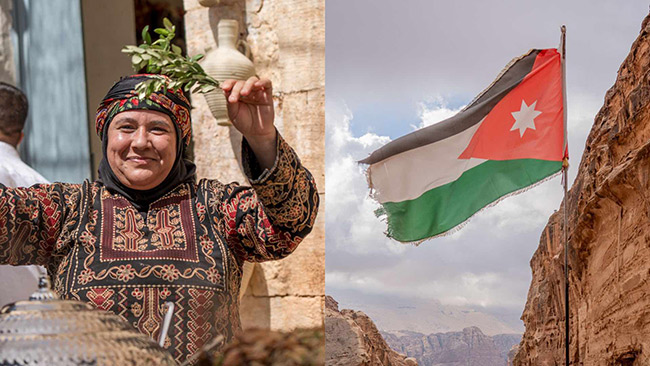
Culturally, Petra reflected a blend of influences—Arab traditions mixed with Greek, Roman, and Egyptian elements, visible in art, architecture, and inscriptions.
Roman Rule and Decline
In 106 CE, Petra was annexed by the Roman Empire and became part of the province of Arabia Petraea. Although the city continued to flourish for some time, its importance gradually declined due to:
- Shifts in trade routes toward sea travel
- Earthquakes in 363 CE and later centuries
- Changing political and economic conditions
By the early Islamic period, Petra had largely been abandoned, though small communities continued to live in the area.
Rediscovery and Modern Exploration
For centuries, Petra remained largely unknown to the Western world. In 1812, Swiss explorer Johann Ludwig Burckhardt, disguised as an Arab traveler, rediscovered the site.
Since then, archaeologists from around the world have studied Petra, uncovering temples, houses, inscriptions, and everyday objects that shed light on Nabataean life.
Petra Today
Today, Petra is Jordan’s most visited tourist attraction and a symbol of national pride. The site attracts millions of visitors each year and plays a vital role in the country’s economy.
Efforts are ongoing to balance tourism with preservation. Environmental factors, erosion, and human impact pose challenges, making conservation a top priority.
Petra in Popular Culture
Petra has captured global imagination and appeared in numerous films, documentaries, and books. One of its most famous appearances is in the movie “Indiana Jones and the Last Crusade”, where Al-Khazneh was featured as the entrance to the Holy Grail’s resting place.
Petra Jordan Map
Petra is far more than an ancient city carved in stone—it is a masterpiece of human creativity, resilience, and adaptation. From its ingenious water systems to its monumental architecture and multicultural heritage, Petra stands as a powerful reminder of a civilization that thrived against the odds.
As the Rose-Red City continues to inspire awe, it also calls for respect and preservation, ensuring that future generations can marvel at one of humanity’s greatest achievements. Petra remains, without doubt, one of the most extraordinary archaeological wonders the world has ever known.
Sources
National Geographic – Petra
Encyclopaedia Britannica – Petra
UNESCO World Heritage Centre – Petra
Oxford Research Encyclopedia of Archaeology
Brown University – Petra Great Temple Excavations

