

Oman Country Guide: Geography, History, Culture & Economy
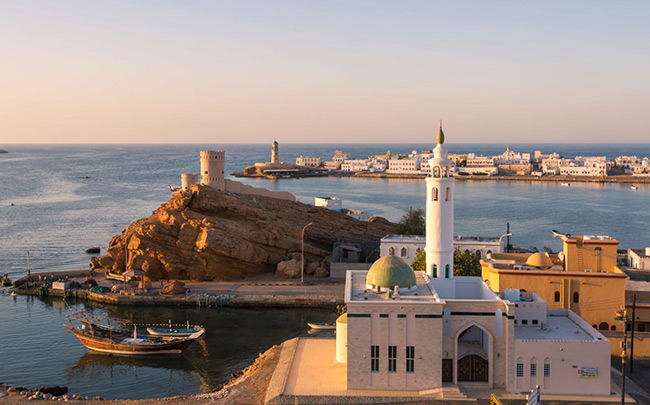
Oman, officially known as the Sultanate of Oman, is a country located on the southeastern coast of the Arabian Peninsula, where the deserts of Arabia meet the waters of the Arabian Sea and the Gulf of Oman. Unlike many of its neighbors, Oman has followed a distinctive historical path—marked by maritime trade, cultural openness, political stability, and a deep respect for tradition.
With ancient forts, dramatic mountains, golden deserts, pristine coastlines, and a rich cultural heritage shaped by centuries of trade with Africa, India, and Persia, Oman stands as one of the most fascinating yet understated nations in the Middle East.
Geography and Location
Oman occupies a strategic position at the mouth of the Strait of Hormuz, one of the world’s most important maritime chokepoints. It borders:
Saudi Arabia to the west, United Arab Emirates to the northwest, Yemen to the southwest, Arabian Sea and Gulf of Oman to the east and north.
Major Geographical Features
Al Hajar Mountains – Stretch across northern Oman, reaching heights of over 3,000 meters.
Rub’ al Khali (Empty Quarter) – One of the world’s largest sand deserts.
Wadis – Seasonal river valleys such as Wadi Shab and Wadi Bani Khalid.
Dhofar Region – A unique southern area influenced by monsoon rains (Khareef).
Early History and Ancient Oman
Oman’s history dates back thousands of years. Ancient texts from Mesopotamia refer to the region as Magan, famous for its copper production and maritime trade as early as 3000 BCE.
Key Ancient Influences
Trade links with Sumer, Indus Valley, and Persia, Renowned shipbuilders and sailors, Early adoption of irrigation systems (Falaj).
Oman played a crucial role in connecting the civilizations of the ancient world through sea trade.
Islamic Era and Ibadi Tradition
Islam reached Oman during the lifetime of the Prophet Muhammad in the 7th century. Omanis accepted Islam peacefully and developed a unique Islamic identity centered on Ibadi Islam, which emphasizes moderation, tolerance, and community consensus.
Ibadi Islam helped shape Oman’s:
Political structure, Social harmony, Religious tolerance.
This tradition remains a defining feature of Omani society today.
Portuguese, Persian, and Omani Empire
In the 16th century, the Portuguese occupied key Omani ports, including Muscat, to control Indian Ocean trade routes. However, they were expelled in 1650 by the Omanis, marking the rise of Omani naval power.
Omani Maritime Empire
By the 18th and 19th centuries, Oman established an empire stretching from:
Coastal Arabia, Southern Iran, East Africa, including Zanzibar.
Zanzibar later became the capital of the Omani Empire under Sultan Said bin Sultan, making Oman a major Indian Ocean power.
Modern Oman and Sultan Qaboos Era
In 1970, Sultan Qaboos bin Said came to power and transformed Oman from an isolated state into a modern nation.
Major Achievements, Nationwide education system, Modern healthcare, Roads, ports, and airports, Diplomatic neutrality.
Sultan Qaboos ruled until 2020 and is remembered as the architect of modern Oman.
Government and Political System
Oman is a hereditary absolute monarchy led by the Sultan, who serves as:
Head of State, Head of Government, Commander-in-Chief.
The current ruler is Sultan Haitham bin Tariq, who continues policies of modernization balanced with tradition.
Economy of Oman
Oman’s economy is traditionally based on oil and gas, but diversification is a national priority.
Key Economic Sectors
Oil and natural gas, Logistics and ports, Tourism, Fisheries, Mining and Renewable energy.
The government’s long-term development plan, Vision 2040, aims to reduce oil dependence.
Omani Society and Culture
Language
Official language: Arabic
English widely spoken
Dress
Men: Dishdasha and kumma.
Women: Abaya and headscarf (varies by region).
Hospitality
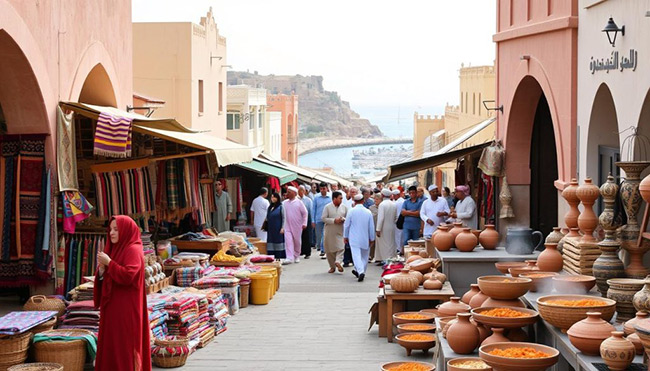
Omanis are renowned for their hospitality, often welcoming guests with Dates Omani coffee (Kahwa).
Religion and Tolerance
Oman is known for its religious harmony. Mosques, churches, and temples coexist peacefully.
Majority: Ibadi Muslims.
Minorities: Sunni, Shia, Christians, Hindus.
This tolerance has made Oman a mediator in regional diplomacy.
Architecture and Historic Sites
Forts and Castles
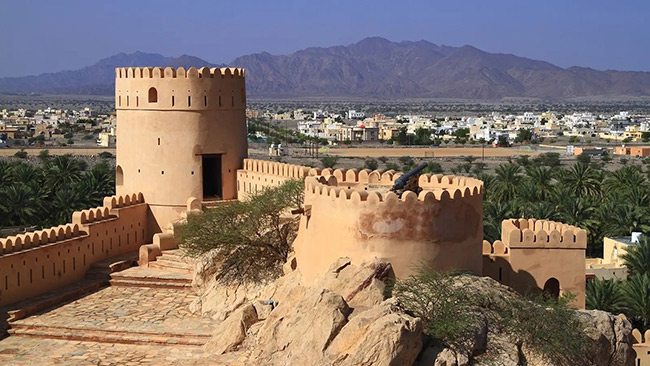
Nizwa Fort, Bahla Fort (UNESCO World Heritage Site), Jabrin Castle.
Mosques
Sultan Qaboos Grand Mosque – One of the largest mosques in the world.
Ancient Settlements
Bat, Al-Khutm, and Al-Ayn archaeological sites (UNESCO).
Natural Wonders of Oman
Oman offers some of the Middle East’s most diverse landscapes.
Popular Natural Attractions, Wahiba Sands desert, Jebel Akhdar (Green Mountain), Salalah during monsoon season, Musandam Fjords and Ras Al Jinz turtle reserve.
Cuisine of Oman
Omani cuisine reflects Arab, African, and Indian influences.
Traditional Dishes
Shuwa (slow-cooked lamb), Majboos, Mashuai (kingfish with rice) and Halwa (Omani sweet).
Spices such as cardamom, saffron, and cloves are widely used.
Festivals and Traditions
National Day (18 November), Eid al-Fitr & Eid al-Adha and Traditional dances like Razha and Al-Azi.
Omani culture emphasizes poetry, storytelling, and oral traditions.
Tourism in Oman
Oman promotes sustainable and cultural tourism, avoiding mass commercialization.
Why Visit Oman?
Safe and peaceful, Authentic Arab culture, Friendly locals, Diverse landscapes, Rich history.
Tourism is a growing pillar of Oman’s economy.
Education and Healthcare
Free education and healthcare for citizens, Universities like Sultan Qaboos University and High literacy rate.
Foreign Policy and Global Role
Oman is famous for its neutral diplomacy, often acting as a mediator in regional and international conflicts.
Challenges and Future Outlook
Challenges
Oil dependency, Youth employment and Water scarcity.
Future Vision
Economic diversification, Green energy, Innovation and education.
Oman’s careful approach ensures steady progress without cultural loss.
Oman is a country where history and modernity coexist gracefully. From ancient copper traders to a powerful maritime empire, and from isolated mountains to modern cities, Oman’s journey is unique in the Arab world. Its people, culture, tolerance, and natural beauty make it a model of balance and stability in a rapidly changing region.
For travelers, historians, and cultural enthusiasts alike, Oman offers an authentic and enriching experience—a timeless land rooted in tradition yet open to the future.
Sources
CIA World Factbook – Oman Country Profile
Ministry of Heritage and Tourism, Sultanate of Oman
Oxford Islamic Studies Online – Ibadi Islam and Oman
UNESCO World Heritage Centre – Cultural Sites of Oman
Encyclopaedia Britannica – Oman: History, Geography, and Culture

