

Chichén Itzá: The Sacred Maya City of Science, Power, and Stone
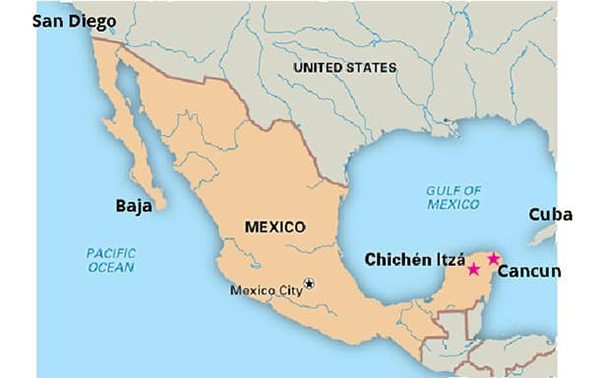
Chichén Itzá is one of the most iconic archaeological sites in the world and a masterpiece of ancient Mesoamerican civilization. Located in the Yucatán Peninsula of Mexico, this ancient city was once a thriving political, economic, and religious center of the Maya civilization.
Renowned for its monumental architecture, advanced astronomical knowledge, and cultural fusion, Chichén Itzá stands today as a testament to human ingenuity and spiritual depth.
Designated a UNESCO World Heritage Site in 1988 and named one of the New Seven Wonders of the World in 2007, Chichén Itzá attracts millions of visitors each year. Beyond its visual grandeur, the site offers profound insight into Maya cosmology, mathematics, engineering, warfare, and ritual life.
Geographical Location and Meaning of the Name
Chichén Itzá is situated in the eastern portion of Mexico’s Yucatán Peninsula, approximately 120 kilometers (75 miles) east of Mérida. The region lacks rivers, so the ancient Maya depended heavily on cenotes—natural limestone sinkholes that provided access to groundwater.
The name “Chichén Itzá” comes from the Maya language:
- Chi = mouth
- Ch’en = well
- Itzá = name of a powerful Maya group
Thus, Chichén Itzá means “At the mouth of the well of the Itzá people.” This refers specifically to the nearby Sacred Cenote, which played a central role in religious ceremonies.
Historical Background
Early Development (c. 600–800 CE)
Chichén Itzá began to rise as an important settlement during the Late Classic Period of Maya history. Early architecture reflects traditional Maya styles, particularly in the southern part of the site.
Peak Power and Cultural Fusion (c. 800–1100 CE)
Between the 9th and 11th centuries, Chichén Itzá became one of the most powerful cities in Mesoamerica. During this period, the city shows strong influences from Toltec culture, likely from central Mexico. This fusion is visible in architecture, sculpture, and religious iconography.
Rather than being conquered outright, many scholars believe Chichén Itzá was shaped by political alliances, trade, and cultural exchange.
Decline (after c. 1200 CE)
By the 13th century, Chichén Itzá began to decline for reasons still debated. Possible causes include:
- Internal political conflict
- Environmental stress and drought
- Shifts in trade routes
The city was not entirely abandoned but lost its dominance as power shifted to other centers like Mayapán.
Urban Planning and Architecture
Chichén Itzá covers more than 10 square kilometers and demonstrates remarkable urban organization. The city was built without metal tools or beasts of burden, yet its structures show extraordinary precision.
El Castillo (Temple of Kukulcán)
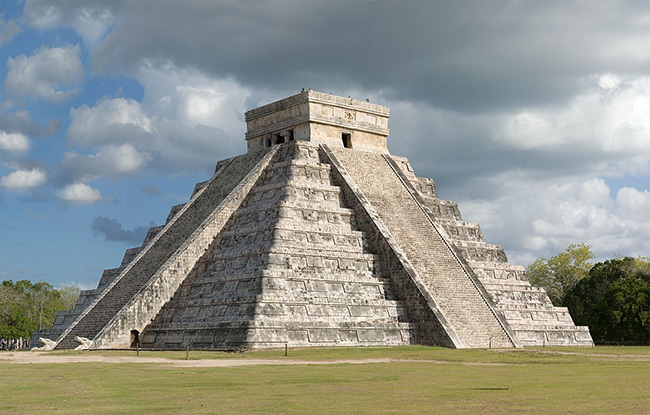
The most famous structure at Chichén Itzá is El Castillo, also known as the Temple of Kukulcán.
- A step pyramid standing about 30 meters (98 feet) tall
- Four staircases, each with 91 steps
- Including the top platform, the total equals 365 steps, symbolizing the solar year
Astronomical Significance
During the spring and autumn equinoxes, sunlight creates the illusion of a serpent descending the pyramid, formed by triangular shadows along the staircase. This represents Kukulcán, the feathered serpent deity.
This phenomenon reveals the Maya’s deep understanding of astronomy, geometry, and solar cycles.
The Great Ball Court
The Great Ball Court at Chichén Itzá is the largest known ball court in Mesoamerica.
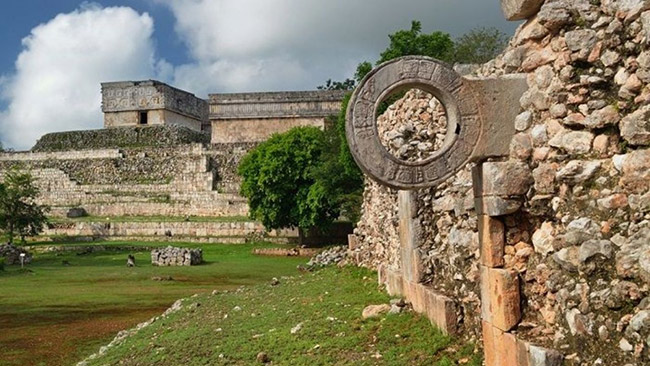
- Length: about 168 meters (551 feet)
- Height of walls: over 8 meters (26 feet)
The ball game played here, known as pok-ta-pok, had religious and political significance. Carvings suggest ritual sacrifice may have followed certain games, possibly involving elite players rather than captives.
Remarkably, the court has extraordinary acoustic properties—a whisper at one end can be heard clearly at the other.
Temple of the Warriors
This impressive structure consists of:
- A stepped pyramid
- A vast courtyard surrounded by hundreds of stone columns
The columns depict warriors holding weapons and shields, highlighting the militaristic aspect of Chichén Itzá during its peak. The temple shows strong Toltec influence, particularly in its warrior imagery.
At the top lies a Chac Mool statue, believed to have held offerings such as food, jade, or human hearts.
The Sacred Cenote
The Sacred Cenote is a massive natural sinkhole about 60 meters (200 feet) in diameter.
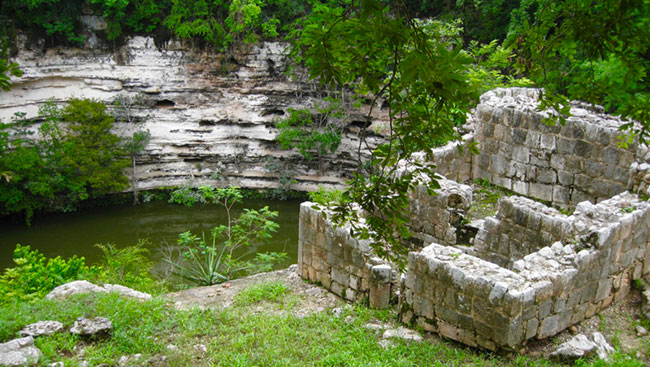
Archaeological excavations have uncovered:
- Gold, jade, obsidian, and ceramics
- Human remains, including children and adults
These findings confirm that the cenote was used for ritual offerings and sacrifices, often to appease the rain god Chaac, especially during droughts.
El Caracol (The Observatory)
El Caracol is a circular structure built on a rectangular platform, unique in Maya architecture.
It functioned as an astronomical observatory, aligned with:
- The movements of Venus
- Solar solstices and equinoxes
The Maya associated Venus with warfare and divine timing, and observations from El Caracol helped guide political and ritual decisions.
The Nunnery Complex
Despite its Spanish name, the Nunnery was not a religious residence for women. Instead, it was likely an administrative or elite residential complex.
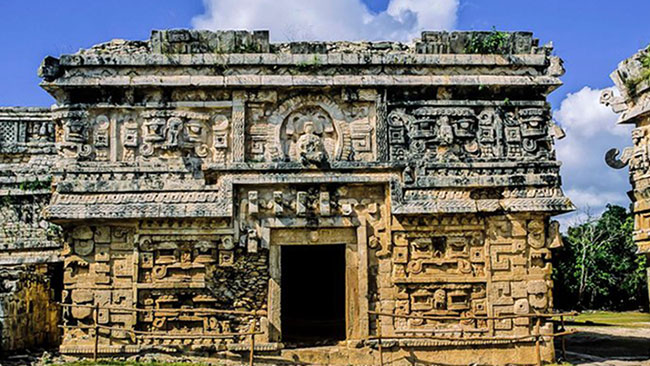
It features:
- Elaborate stone mosaics
- Masks of the rain god Chaac
- Puuc architectural style
Religion and Mythology
Religion was central to life in Chichén Itzá. The Maya believed in a layered universe:
- Heavens above
- Earth in the middle
- Xibalba (the underworld) below
Key deities included:
- Kukulcán – feathered serpent god
- Chaac – rain and fertility god
- Itzamna – creator and wisdom god
Rituals involved:
- Offerings
- Bloodletting
- Human sacrifice (in specific ceremonial contexts)
These acts were seen as necessary to maintain cosmic balance.
Science, Mathematics, and Astronomy
The Maya civilization achieved extraordinary scientific advances long before modern instruments.
Mathematics
- Use of the concept of zero
- Base-20 numerical system
Calendars
- Tzolk’in (260-day ritual calendar)
- Haab’ (365-day solar calendar)
- Long Count calendar for historical dating
Architectural alignments at Chichén Itzá reflect precise calendar calculations.
Daily Life and Economy
Chichén Itzá was a major trade hub, connected to distant regions.
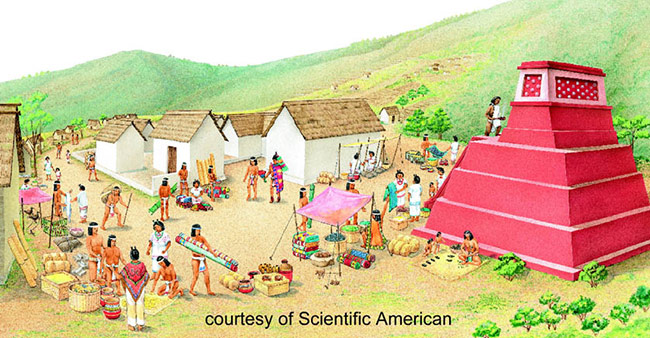
Trade Goods
- Jade from Guatemala
- Obsidian from central Mexico
- Cacao, cotton, salt, and feathers
Social Structure
- Ruling elite and priests
- Warriors
- Artisans and merchants
- Farmers
Agriculture relied on maize, beans, squash, and chili peppers, supported by sophisticated water management.
Rediscovery and Archaeology
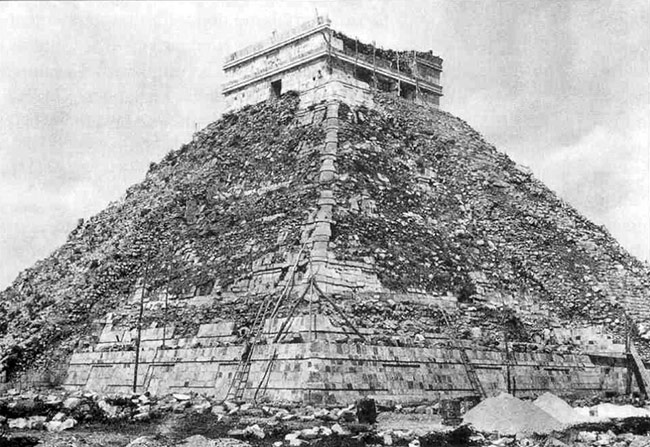
After Spanish contact in the 16th century, Chichén Itzá was never entirely forgotten by the Maya people, but it gained global attention in the 19th century.
Key archaeological work was carried out by:
- Alfred Maudslay
- Edward Herbert Thompson
- Carnegie Institution of Washington
Restoration efforts continue today under Mexico’s INAH (National Institute of Anthropology and History).
Chichén Itzá Today
Today, Chichén Itzá is:
- One of Mexico’s most visited archaeological sites
- A symbol of indigenous achievement
Climbing the pyramid is no longer allowed, but visitors can explore the site respectfully and learn from guides and museums.
Chichén Itzá Map
Chichén Itzá is far more than a collection of ancient ruins—it is a monumental record of human intelligence, spirituality, and adaptability. Its pyramids encode astronomical knowledge, its cenotes reflect sacred beliefs, and its carvings tell stories of power, sacrifice, and cosmic order.
As one of the greatest cities of the ancient world, Chichén Itzá continues to inspire awe and curiosity, reminding us that long before modern science, the Maya had already mastered time, stone, and the stars.
Sources
National Geographic, Chichén Itzá: Ancient Maya City
Britannica Encyclopedia, Chichén Itzá | Ancient City, Mexico
Instituto Nacional de Antropología e Historia (INAH), Mexico
Smithsonian National Museum of Asian, African and American Art
UNESCO World Heritage Centre, Chichén Itzá – World Heritage Site Description

