

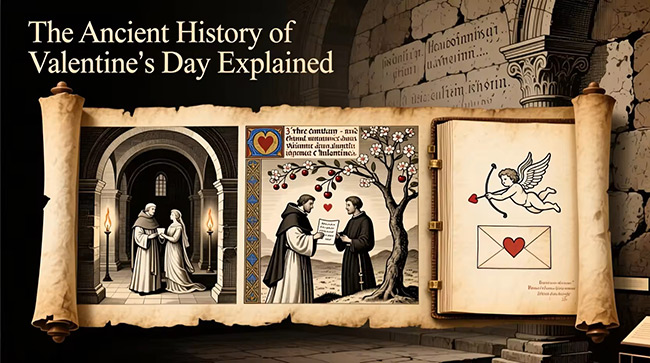
The Eternal Heart: A Comprehensive History of Valentine’s Day
Valentine’s Day is one of the most polarizing holidays on the modern calendar. To some, it is a day of profound romantic expression; to others, it is “Single Awareness Day” or a “Hallmark Holiday” designed to drive consumerism. However, the true history of Valentine’s Day is far more complex than a box of chocolates. It is a story of martyrdom, pagan ritual, poetic invention, and industrial revolution.
Chapter 1: The Dark Origins (Lupercalia)
To understand Valentine’s Day, we must travel back to the Roman Empire. Long before the Church canonized saints, Romans celebrated Lupercalia from February 13 to 15.
The Ritual of Fertility
Lupercalia was a wild, bloody, and highly ritualistic festival. It was intended to avert evil spirits and purify the city, releasing health and fertility. The “Luperci” (the brothers of the wolf) would sacrifice goats and a dog at the Lupercal cave, where the legendary founders of Rome, Romulus and Remus, were said to have been nursed by a she-wolf.
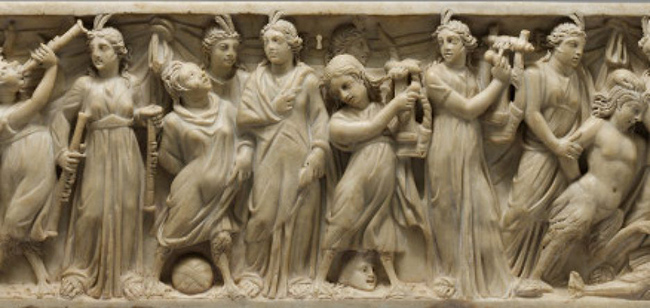
The “Slapping” Tradition
Young men would cut thongs (strips) from the hides of the sacrificed animals—called februa (from which we get the name “February”)—and run around the Palatine Hill. They would gently strike women with these hides. Far from being an act of violence, Roman women would line up for this, believing the touch of the hide would ensure fertility and ease the pains of childbirth.
Chapter 2: The Mystery of the Martyr
As Christianity spread, the Church sought to replace “heathen” festivals with Christian holidays. In 496 AD, Pope Gelasius I declared February 14th as St. Valentine’s Day, effectively “Christianizing” the window of Lupercalia.
Who was St. Valentine?
The Catholic Church recognizes at least three different saints named Valentine or Valentinus, all of whom were martyred.
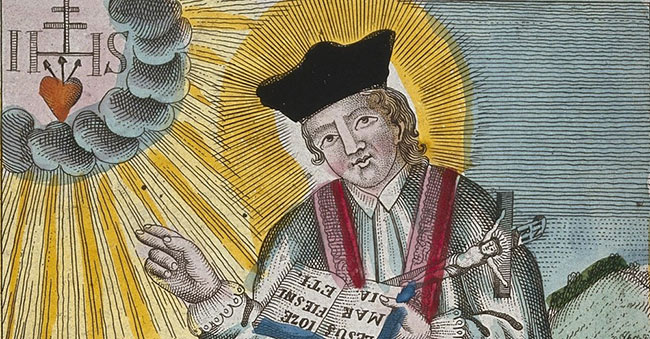
- Valentine the Priest: The most popular legend claims that Emperor Claudius II (Claudius the Cruel) banned marriage for young men because he believed single men made better soldiers. A priest named Valentine defied the decree and performed marriages in secret. When discovered, he was beaten and beheaded on February 14, around 270 AD.
- Valentine of Terni: A bishop who was also martyred by Claudius II outside Rome.
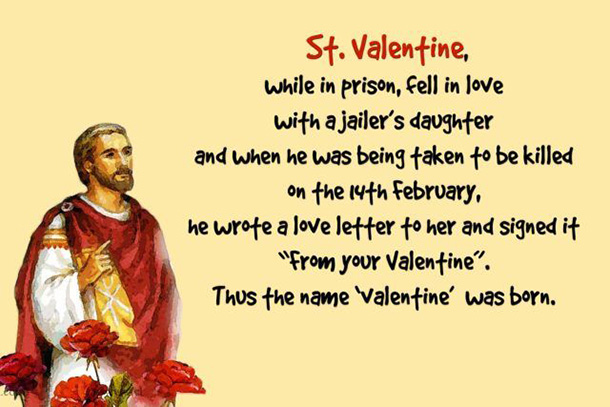
- The Jailer’s Daughter: Another legend suggests Valentine was killed for attempting to help Christians escape Roman prisons. While imprisoned, he allegedly healed the blind daughter of his jailer. Before his execution, he wrote her a letter signed, “From your Valentine,” an expression still used today.
Chapter 3: The Middle Ages and the “Love Birds”
For centuries, Valentine’s Day remained a somber religious feast with no romantic connotations. That changed in the 14th century, thanks to the “Father of English Literature,” Geoffrey Chaucer.
The Invention of Romantic Love
In 1382, Chaucer wrote Parlement of Foules to honor the first anniversary of the engagement of King Richard II to Anne of Bohemia. He wrote:
“For this was on Saint Valentine’s Day, when every bird comes there to choose his mate.”
At the time, people in England and France believed that February 14th marked the beginning of birds’ mating season. Chaucer—and later Shakespeare—linked the day to the idea of human courtship, forever rebranding the martyr’s feast as a lover’s holiday.
Chapter 4: The Evolution of the “Valentine”
By the 17th and 18th centuries, the holiday had gained significant traction in Great Britain.
The Hand-Written Era
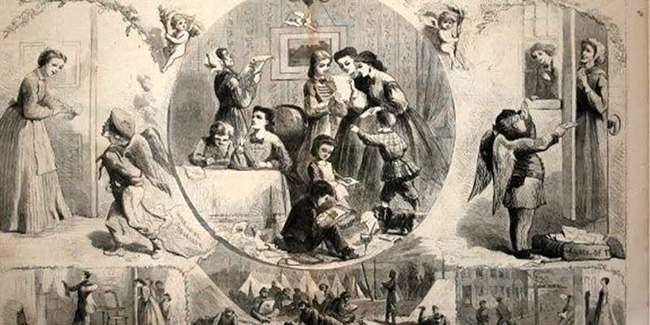
Friends and lovers of all social classes exchanged small tokens of affection or handwritten notes. By the mid-18th century, “Valentine Writers” (books containing suggested poems and messages) were published for those who lacked the poetic skill to woo their partners.
The Victorian Boom
The Industrial Revolution changed everything. With the invention of the “Penny Post” in 1840, sending mail became affordable for the average person. In the UK and USA, this led to a massive surge in Valentine’s cards.
- Esther Howland: Known as the “Mother of the American Valentine,” she began mass-producing intricate cards with real lace, ribbons, and “scrap” (colorful paper illustrations) in the 1840s.
- Vinegar Valentines: Interestingly, the Victorians also sent “insult” cards to people they disliked or unwanted suitors, showing that the holiday always had a cheeky or dark side.
Chapter 5: The Commercial Giant (20th Century to Present)
In 1913, Hallmark Cards began mass-producing Valentines. This moved the holiday away from handmade sentiment toward a standardized commercial exchange.
The Economics of Love
Today, Valentine’s Day is a massive economic engine.

- The Jewelry Factor: About 10% of all marriage proposals happen on Valentine’s Day.
- The Flower Industry: Millions of roses are grown in South America and flown globally just for this 24-hour window.
- Global Reach: While it started in the West, it is now celebrated in various forms across East Asia, South Asia, and the Middle East, often blending with local traditions (like “White Day” in Japan and Korea).
Summary of the Timeline
| Era | Focus | Key Element |
| Ancient Rome | Lupercalia | Fertility and Purification |
| 5th Century | Christianization | Pope Gelasius I names the feast |
| 14th Century | Poetry | Chaucer links the day to romance |
| 19th Century | Industrialization | Mass-produced cards (Esther Howland) |
| 21st Century | Commercialization | Experience-based gifts and Digital Love |
Ultimately, Valentine’s Day survives because it reflects our own evolution—moving from the primal rituals of the ancient world to the intentional, heartfelt gestures of the modern era.
It remains a recurring testament to the fact that while the methods of courtship change, the fundamental human impulse to honor love remains constant. More than just a date on the calendar, it is a vibrant bridge between our historical traditions and our eternal need for connection.
Sources
Encyclopædia Britannica
The Acta Sanctorum (Lives of the Saints)
The History Channel & Smithsonian Magazine
Geoffrey Chaucer’s Parlement of Foules (1382)

